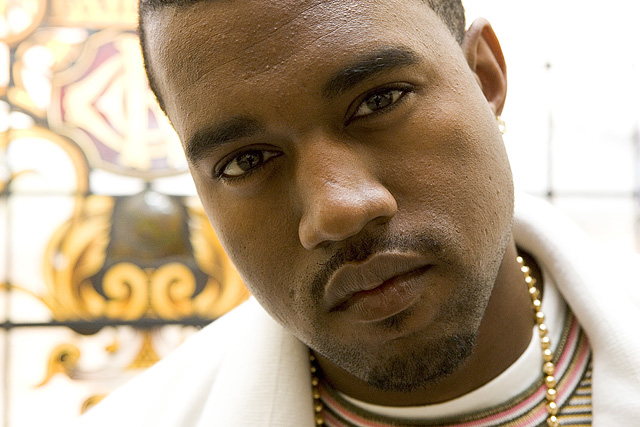
SCREAMS FROM THE HATERS GOT A NICE RING
TO IT or IF THEY HATE THEN LET ‘EM HATE AND
WATCH THE MONEY PILE UP
Graduation is Kanye’s
first great achievement, in terms of his rapping career. Yes, Late Registration and The College Dropout were great albums,
with some of my favorite tracks on them. Just releasing TCD was an achievement, and being able to mix standard braggadocio
and real emotions on Late Registration
was a revelation. But Graduation
takes what he’s done to a whole new level.
With
this album, which was released in 2007, Yeezy had finally mastered the art of
rapping. Yes, there is an art, much to the surprise of many. I kind of glazed
over it while discussing Kendrick Lamar, but technical
ability is something that all rappers have to learn, develop, and perfect
before they can join the circle of greats. The easiest example to use is my
boy, Donald Glover, aka Childish Gambino. His very early stuff showed his
lyrical ability, but his technical ability was so awful he disowned his first
mixtape. I don’t even like the albums before Culdesac, because his technique was still so bad. I mean, listen to
“Fresh”, or “The Rocker”, and compare
it to “Bonfire” from his
newest album. There’s a clear difference in his technique that just about
anyone can identify.
There
are 2 main aspects of technique that I’ve identified, and are worth talking
about – flow, and delivery. Delivery is easy to describe, but hard to do.
Simply put, it’s the inflections, tones, and pitches that an emcee uses when he
or she is rapping. Just as you might sing a song quietly to convey a gentle,
calm, and/or sad tone at a particular part, a rapper will change how he
delivers his lines to put emphasis on a particular part. For instance, Yeezy
will drop the pitch of his voice and get this growl to his voice to add anger
and force to his lines. “Can’t Tell Me Nothing”, shows off
this mastery of delivery. Most notably, whenever he says “Nothing” in the hook,
he does his signature growl, adding this element of aggressiveness and hate to
the line. But he’s also a bit condescending and sarcastic in the delivery of
the line, as if he’s saying “oh yeah, I totally don’t listen to you. I don’t
take your advice at all”. It helps secure and present the theme of the song, in
that people think he’s so egotistical and narcissistic that he can’t hear what
their critiques, but in reality he does. If he said those lines any different,
the entire subtext of the song would be the exact opposite, and probably would
make the track worse.

Flow
is a bit harder to describe, so excuse me if this kind of hard to understand. Flow
is essentially the rhythm with which you say the lyrics to the beat, much like
the length and pitch of notes in singing. However, singing is different, since notes
are fairly standard for each song. While they can be changed, it’s really only
based on the range of the singer; they’re still either high or low notes, just
higher or lower based on the voice. Same with how long the singer holds the
note; it’s generally defined in the song, but can be played with depending on
the singer’s rendition. Flow, on the other hand, is different for each person,
and something that can be worked on and improved. Some people just have natural
flow that they don’t have to work on very much, while other people spend years
trying to get that right flow. Not to say singers don’t work on their craft and
can learn to sing, but singing, for the most part, relies more on natural
talent and understanding your range than any development, practice, and
learning.
It’s
impossible to show you his flow now, without you saying “So? This is exactly
what rap is supposed to sound like”. And I would say you’re right. You can
really only tell Kanye’s improvements if you listen very closely to his early
stuff and his newer stuff over and over and over again. However, I’d go and
listen to the stuff I posted in Part
1
of this dissertation/essay/super-long article/pointless exercise, and compare
it to some of the tracks I talk about here, and see if you can tell the
difference between the lyrical rhythm he has on those tracks compared to the
rhythm he has on Graduation. You can
also check the flow of those early CG tracks, and compare them to the track off
of Camp, for a slightly more obvious
example.
Given
my current studies as a business major, I’ve become an economic expert, and
know that competition is good for all the firms in the market. The perfect
example is the “beef’ between 50 Cent and Kanye West when they released their
albums, Curtis and Graduation respectively, on the same day. There was a
rumor that 50 Cent would stop releasing solo music if he lost, however, he
claimed that was untrue. Luckily, or unluckily depending on your view of his
music, he lost by about 300,000 albums, 1 million to 700,000. Both good albums
for the particular type of hip-hop each are in, but it’s one of the most
obvious signs that “gangsta rap”, in its early 2000’s form, was dead compared
to the new kind of rap Kanye was ushering in.

Now,
with the production on Graduation, he took inspiration from The Rolling Stones,
Led Zeppelin, and U2 to make a more stadium-friendly sound.
He mostly took inspiration for his melodies and chord-progressions, but the
fact that he looked to rock bands not just for samples, but as influence, is
relatively unheard of in modern hip-hop. Or at least prior to 2007. Today,
artists like Pitbull and Lil Wayne both try to incorporate these massive,
stadium-filling beats into their albums, since they also have started to play
to sell-out crowds at huge venues. However, he still kept that great acoustic
instrument sound, such as his string orchestra from Late Regristation, and some nice piano parts.
The
musical influence is pretty clear in songs like “I Wonder”. Sampling the
vocals and piano of “My Song” by Labi Siffre,
he builds a massive wall of sound filled with pounding bass drums, snare-like
claps, beautiful strings, and synths that bounce between ethereal to
in-your-face and distorted. However, as I’ve mentioned before, he lets the
sample carry the beat, which is how you’re supposed to do it. And when he takes
the piano away, either the orchestra or the synths take its place, playing the
same notes and progression. But each has its own sonic texture (the most
pretentious term to describe music) – the piano is quiet, intimate, and soft,
the synths are scratchy, loud, and imposing, and the violins are big, warm, and
beautiful. It’s just a pleasant song with an amazing melody.
He
also looked to Bob Dylan, Johnny Cash, and Modest Mouse to improve his lyrics.
He realized that, while his previous lyrics were impactful, they weren’t
connecting with the audiences when done live, nor did many understand the
lyrics. Not only did he want to be saying something important or personal, but
he also wanted to get crowds going with his words. He was also looking to
improve his storytelling ability. Looking back, especially after all this
analysis, I prefer the lyrics of his first two albums. They had so much more of
an impact on me, and felt so much more real, personal, and important. However,
I listened to them in room or on the way to school, not in a 50,000 person
stadium, and I can only imagine how much more exciting and cool it must be to
hear “Stronger” or “Flashing Lights” live.

As
a good example of that more electrifying/story-based lyricism, let’s look at “Homecoming”. It’s the
story of Kanye and his hometown of Chicago, and the love he has for it, along
with the troubles they’ve had with each other. Calling the city “Windy”, in
reference to Chicago being the “Windy City” (I like to think it’s also a nod at
The Association song “Windy”, aka one of the whitest songs
known to man). Originally recorded as “Home” for his 2003 mixtape Freshman Adjustment, he replaced John
Legend’s hook after meeting with a new one written by Chris Martin of Coldplay.
He also re-did the beat, switching out a soul sample for a very uplifting and
powerful piano and what sounds like a recording of a concert or park. He also
re-wrote some of his lyrics, and re-recorded his vocals, given his new
abilities at delivery and flow. And it all comes together into a beautiful, but
somewhat tragic, love song to the place he grew up.
However,
he also took a lot of influence from electronic music. Looking to house,
Euro-disco, and indie tunes for inspiration, he completely separated himself
from the beats on his first two albums. As I described before in Part 1 and
Part 2, College Dropout featured some
sped-up soul samples and sparse instrumentation, and Late Registration saw Kanye move to more orchestral arrangements.
However, on this album, he went for more synthesizers and house beats, along
with some rave and disco sounds and elements. However, unlike many of those
genres, he didn’t loop any of his beats. All of the music is organically
created, which led to some very interesting, and pleasing, variations during
bridges, intros, and even during verses.
“Good
Life” is a perfect example of this. Based on the keyboards from “P.Y.T. (Pretty Young Thing)” by Michael
Jackson, along with sampling a bit of his own “School Spirit”, he crafted a
fun, exciting song that makes you truly realize how far Kanye has come. From
fighting to get a record released to being able to replace his
teeth with diamonds,
he’s got the good life. He pitched up and slowed down the P.Y.T. piano almost
until they sounded his traditional sped-up soul samples, while the sample from
his own song is pumped up and pitch-dropped until it sounds distorted and
face-melting. It’s most certainly the best anthem for having money that I’ve
ever heard, and I listen to lots and lots of rap. I think most of that can be
attributed to the fact that it isn’t a song about making you jealous of his
money, but rather saying how happy he’s been since he’s gotten it. As strange
as it is to say this about Kanye West, but it’s a somewhat reserved braggadocio
about money, cars, clothes, and women.

And
let’s not forget about Kanye’s mega-hit “Stronger”. Taking the
song “Harder, Better, Faster, Stronger” by Daft Punk, chopping it up, mixing it
around, and adding a little Yeezy flair, West created one of the most memorable
beats of not only 2007, but really, in the entirety of rap. Very rarely does
the beat become more memorable than the lyrics in a rap song, but Kanye is one
of the few who can do that. Hell, I can barely listen to the original without
going “why is this so slow? Where’s Kan- Oh, this is Daft Punk” (as my fellow
bloggers know, I am expert when it confusing songs/bands). Daft Punk even loved
the track, saying “the sound was
really fat. It sounds really big”, which, in the electronic scene, is a
huge compliment, especially from a group known for creating “fat” and “big”
sounds. And let’s not forget the hype it got for Hype Williams, who directed
the video and became a household name in the music video directing.
Of
course, Kanye West did take a big risk with the song “Barry Bonds”. He decided
that he didn’t want any guest rappers to rap on his album. There’s very few
emcees that have Kanye West’s popularity, or even less, that would release an
album without any help from other rappers. While I’m sure that there are big
albums out there without any guest spots, the really only other one I can think
of is Nas’s Illmatic. However, he eventually
would include 2 rappers – Mos Def, who was
only used for a hook on “Drunk and Hot Girls”, and Lil Wayne. Lil Wayne, in
2007, was one of the biggest rappers in the game. To include him on your album,
especially when you don’t have the best rapping skills, could be disastrous; it
could only further expose your flaws, and embarrass you. However, on “Barry
Bonds”, Kanye destroyed Lil Wayne, who delivered an entirely forgettable verse
that seemed afraid of Kanye’s verse. And after Lil Wayne wet himself on Kanye’s
album, his rap stock went down, and has been sliding down ever since. And
Kanye’s has only gone up, as has his ego.
This
album was a new high for Kanye. It was much tighter and more cohesive than his
previous two albums, and yet so much bigger. It was finally the spark that got
other people excited for rap, people that wouldn’t think to listen to it. And
while the term “pop-rap” is not only funny, but degrading, Kanye West was able
to create a lot of pop-rap that not only had deep meaning, but also hood enough
to keep more traditional rap fans happy. Which, if you think about it, is
amazing, so amazing (that’s a reference from the future, because I use my time
machine well). This album is even credited with the recent revival of disco and
electronic-based music, which means that Pitchfork and hipsters everywhere
should be thanking and praising Kanye.
Next
time, we’ll explore one of the most traumatic, horrible times in Kanye’s life,
some of which he brought on himself.