My very first reaction to this new track: Arcade Fire sounds like dance pop! No doubt a result from working with both David Bowie and James Murphy. Yes, they were leaning this way for some time, but I get the strange feeling of “Get Lucky” by Daft Punk. Don’t get me wrong, I was preparing myself for Neo-Arcade Fire since their previous album, The Suburbs, which is known to be the album that punched hardcore Lady Gaga fans in the face at the 2010 Grammy Awards. The first half of the record was similar to the band’s original music, but as it progressed, the songs sounded more pop approved (“Sprawl II” for example). That being said, I was hoping for this album to be at least a cross between the two, like before, and not a full immersion into dance pop. Seeing that this is a double album, the band will still most likely appeal to a wide range of fans. Some 50+ songs were written for the album, so one could imagine that there will be twists and turns to please any listener.
Arcade Fire has always been that giant indie group who play artistic rock and do great live, but their albums are more then a rush of adrenaline. In the case of their first album, Funeral, the instrumentation was awe-inspiring, and the lyrics were like bittersweet emotional lullabies that stood coherent to the album’s title. The next release, Neon Bible, took everything from before, added an assortment of politics and social paranoia, and made it about ten times darker. Lead singer, Win Butler, became more like an activist from then on, depicting the downfall of suburban living in none other than The Suburbs. Fans of the group have been anticipating their next release for some time, but now it is finally here. Surprisingly, I am not disappointed with the new single/album opener, but if I were to hear this band for the first time today, I would not be as impressed. It is a good thing that I do know the band well, because I know that something big is coming.
The new single, “Reflektor”, is actually the longest song that Arcade Fire has released to date (“Vampire Forest Fire” is a close second place). I think people would agree that it definitely has a 1980’s feel to it, along with an assortment of new instruments. The band is definitely expanding their sound, which can be both good and bad at the same time. What has changed from three years back? For starters, the band is no longer the orchestra that it once was, for only six members remain (Not sure what happened to Sarah Neufeld). Win Butler still plays the “activist” role, however, and this time the album seems to represent the disfunction of the digital age, which does sound fitting. Their sound has obviously become more like disco, but is the band merely embracing the glamorous pop culture, or are they trying to prove a point? One thing I do know is that a band like Arcade Fire does not go into the world of music without having a few tricks up their sleeves, and that is why I am very much looking forward to this new album.
After much griping over a lack of interesting new bands to listen to, I went back to the ones I previously invested my time in. A group in particular that had once sparked my attention was the local electric band Power Animal, which had released an EP last year titled Exorcism. I know it is a bit older, but I figured it would never be too late to do a post on this album, mainly because it’s fan-freakin-tastic! The first time I listened to these guys I immediately got their songs stuck in my head. I would then return to Power Animal again and again.
The Philly band’s founder, Keith Hampson, has an interesting story of spending almost a year in and out of hospitals, and instead of playing instruments he played cassette tapes. This inspired the EP, Exorcism, which offers a broad range of sounds in past genres. These were ultimately compiled into six songs and five remixes. Every track is unique by itself, but together they are something much greater. I certainly think that Power Animal deserves more credit than what they were previously given.
Most of the tracks start out glitchy, but as the first thirty seconds roll out, the curtain is unveiled and a beautiful melody blossoms. No song here lacks a great beat, and Power Animal does well to throw out unexpected rifts and harmonies which typically would not make sense, yet they are pulled off magnificently. It is very unpredictable music indeed, never resting or untangling. Normally, something like this would sound monstrous, but I have easily found both the physical and emotional beauty in such a creature. Take the song “Mold Spores” for example, which happens to be the glitchiest of them all. Every four measures, however, I shiver from the soft voice that echoes throughout the track, while Hampson sings, “I wish that I can join you in your search for sacred moments, but I got to cross my lake. I just hope that it’s a little less treacherous than yours has been.”
If there is one thing that I can say about this album it’s that Exorcism at no point is boring. Not only are their melodies spontaneous, but they also use an array of unique instruments which are then glazed over various synth recordings, putting this band in the experimental category as well. I am not to big of an electronic fan, but I do enjoy Power Animal, mainly because amiss all the musical tension there is beauty present at all times, relaying Hampson’s message of finding relief in an environment that offers none. If you don’t believe me, then listen to the title track and see for yourself.
While my original plan was to review Edward Sharpe’s new album this week, I was interrupted with a surprise release by LAKE titled Circular Doorway. I previously reviewed Ashley Eriksson’s new solo album, which was dropped this past Wednesday. No one had expected something from the whole band as well, let alone an entire album. Self-released through Bandcamp, LAKE kept it on the hush, only to tell people of an upcoming release without revealing the date. Their fan page was blowing up that day, first unveiling Circular Doorway, then announcing another album, The World Is Real, that will be released in September. The members of LAKE have certainly been busy this year, so I guess they deserve this amount of attention for the time being.
Two new albums in one year sounded great, but it seemed as if Circular Doorway stood alone among the band’s discography. It feels almost like they recorded a jam session, with much more percussion and catchy rifts than ever before. I then discovered that the band had only six days to collaborate and record these songs, so it makes much more sense for this album to sound more like a session of some sort. The second new release, The World Is Real, is described as a more clean cut album, as Eli Moore explains, “One record was on purpose and the other was by accident”. I did enjoy Circular Doorway, but I don’t think I could compare it to their bigger releases like Let’s Build A Roof and Giving & Receiving. Don’t get me wrong, I’m super glad that LAKE crafted these ten tracks and then promised more along the way. I definitely respect this group much more now.
Perhaps this was not the intended analogy, but Circular Doorway may in fact be a doorway into LAKE’s future sound, which is more digital and exotic. It is no surprise that they have been leaning over this way to appeal to a larger audience. The best part, however, is that LAKE still maintains its authenticity; the soft seventy’s style music with various vocals and jazzy elements. If anything, I might enjoy this broadened sound even more.
What better example is there than the title track which is the album’s opener. It starts out in a whimsical melody but eventually twists into an eerie instrumental. “What You See Is What You Get” carries on with a familiar blues progression, but there’s some catchy vocals and interesting percussion as well. “Don’t Hate Yourself” was one of my least favorite tracks, for I thought they could do without the hey hey’s, na na’s, la la’s, and dut du’s; however, the album does have nice variation in songs like “Crying Room”, where the saxophone and electric piano are played as if it were an old club scene. “Positive Warning” is probably one of the catchiest songs on the album, with quite engaging beat and vocals.
The second half of Circular Doorway begins with the lovely tune, “No Wonder I”, the album's only single which also happens to be BMO’s favorite song. My favorite songs are “Torpedoes” and “Relief”, simply because they are cool, collected and really hard to get out of your head! Yawrood was a recorded instrumental that is played backwards (“Doorway” for those of you who didn't notice). It feels natural despite the rigid sound. “Alone”, the album closer, is no less as rhythmic and catchy as the rest of the album.
Although Circular Doorway is short and not as professionally made as the rest of their discography, LAKE managed to pull off an amazing ten tracks that contain some of the catchiest music the band has ever written. Kudos to LAKE for a great release. I was surprised indeed!
“Come along with me to a town beside the sea / We can wander through the forest and do so as we please,” sings Ashley Eriksson, from her catchy tune, “Island Song”, which any fan of Adventure Time would know and love. As both a solo artist and a member of the band LAKE, Eriksson has gradually made a name for herself in the indie world, especially after recently touring with the band, Mount Eerie, formally known as The Microphones. Now, after several albums, she is returning through K records with a new release, Colours. The album may not be for everyone, but for people who enjoy warm lighthearted sounds with a nostalgic feel, then this is right up their alley.
Earlier this year I reviewed LAKE’s album, Giving and Receiving, which may have been two years late, but I have an excuse since I only joined the blog at the start of this year. I gave it a thumbs up for several reasons, one being that it combined a light feel to a darker tone, meaning that the songs seemed comforting musically but the lyrics were deep, dark, and sometimes even disturbing. Eli Moore sings about burning flesh off of bones under a melody that sounds like it could be aired on a kids show...evidently they have aired their songs on a kids show.
LAKE was easy music to get into, but I could not say the same for Eriksson’s solo work. For the most part the albums were very low quality recording. The songs themselves seemed to be written and arranged very well, but the execution of the music built a wall between Eriksson and the listener. The album, Seasonal Music, first brought me to appreciate her work more. At first glance, it’s nothing more than a 30 minute collection of lo-fi sounds with added harmony and different instruments here and there, but the recurring melodic theme and sentimental feel give the album a whole lot more depth to it. Songs like, “Ode To Melody” and “Rain Now, Red, Blue’” put me in a trance every time. The whole album may sound “fragile”, but it is far from being breakable. There is much originality radiating from Ashley Eriksson’s work.
Once I heard about a new solo album from Eriksson that would be released through K records, I was excited, curious, and a bit surprised since LAKE had also announced a new album later this year. I hoped that Colours would have better quality yet still maintain that style that has worked so well with Eriksson. For the most part I can say that the album fulfilled my expectations. It sounds professionally made and has both new and old qualities.
One of Ashley Eriksson’s main strengths is writing beautiful piano pieces like the opening track, “March Of The Conch”, which I think does a great job of engaging the listener. I wish, however, that she would have put more of these types of tracks into the album. The only other song similar to this one is “Humming In The Dark”, which reminds me of that Charlie Brown song. I thought some other tracks like “Arguably” and “Organ Magic” lacked originality, but “Bury The House” has an interesting rhythm and sound to it as well as a version of “Mother Nature’s Promise”, originally from LAKE’s Giving And Receiving album.
One thing in particular that bothered me throughout the album was the lyrics at times. It seemed like there was supposed to be some meaningful message that was not present enough and still surfaced at the end. I will say that Colours was not strong in that category, but I did enjoy the music very much. Some people may call the tracks sappy, but I thought the songs “Why Are You So Helpless” and the title track were beautiful in both their instrumentation and lyrics. My favorite part of the final track, “Stubborn Eyes Of A Demon”, was the faint whistling of a flute at the very end. I think that one of the album’s biggest strengths was the variation of sounds and melodies that really defined the album’s title, Colours. Overall, this album was a big step forward in Ashley Eriksson’s solo work, and I would definitely like to see more of her releases in the future.
We have a great interview here with swedish singer/songwriter Jonas Carping! We asked him some questions regarding his new solo debut album, All The Time In The World, as well as his band, The Glade, and what inspires him along the way.
How did you and the other members meet?
I met producer and musician Martin Karlsson one night when playing live with The Glade in Stockholm. Martin did the sound for the venue we played and we got to talking after the show. We were about to record a new EP and it got decided that Martin should produce it and we have continued to work together ever since. Martin understands the technical aspects of making music but can also relate to and understand the not so technical "feel part". He is also a brilliant musician. I consider myself extremely lucky to have him as producer and a friend.
Do you mainly perform with the same people?
I perform in a couple of different constellations. Either with The Glade or pure acoustic just guitar and vocal or together with Sigrid Nilsson. Sigrid sings the duet The Sting on All The Time In The World and she also does backing vocals on several of the tracks. She has one of the best voices I have ever heard.
What brought you to working with Sigrid Nilsson on this album?
Sigrid understands the songs, she gets the melodies and lyrics. So she delivers her harmonies and vocals using that understanding. This can be very hard when you're not the creator of the song, to do this with the confidence needed. But her voice is her instrument and she uses it to perfection.
I see that you were also in a band, The Glade, which formed in 2008. What made you want to venture out and write a solo album?
I love The Glade and the songs we do. They're very special to me and so are my bandmates. Last year I had the time to really focus on my songwriting. It was a great thing and it lead to many of the songs on All The Time In The World and also to several new The Glade songs. The songs you'll find on All The Time In The World are more lowkey and wouldn't really fit with The Glade. I still love these type of songs though and wanted to make something of it. Something intimate, up close and personal. At first it started out as just a guitar and vocal record. But very early on we felt we should make something more out of it. Really work on the sound and create a great environment for the songs. We put a lot of hard work into this. Then we had awesome musicians to help us realize our vision. And it worked. I love the sound of the album, it has great depth and beauty to it.
Is there anything in particular that inspires you immensely when writing lyrics or melodies? The constant struggle of keeping the dream alive. In there lies immense portions of inspiration. Heartbreak works the same way. Inspiration also rises from other peoples situations and what they struggle with. If you as a songwriter can relate to this, there is a lot of inspiration to be found there too. Basically anything that strikes that chord within you can be referred to as inspiration.
Were there any albums that inspired you when making your own?
Bob Dylan - Desire. It's one of my all-time favorite albums. Basically anything with Leonard Cohen. I grew up in the nineties, so I guess there's a chunk of Nirvana, Pearl Jam and Alice In Chains in there too. Top that of with some (early) Oasis, a bit of Springsteen and some Fleetwood Mac (Rumours in particular) and I guess that would, in my mind, add up to All The Time In The World. As for more recent inspiration, Mumford & Sons is just plain greatness and pure genious mashed up into the greatest band of this decade.
Those are a good number of albums with various styles as well. Is there anything in common with all of them that really pulls you in when listening?
Great lyrics always pull me straight in. But that isn't enough, you need a great melody to match it. And the way the lyric is delivered. The phrasing, the choice of words, the voice of course. And dynamics, I love dynamics. But in the end it's all about that simple yet impossible thing to describe. You feel it and you know it, but you don't really know why. And you don't have to. If you love a specific song, play it all the time and play it loud (except if you're listening to greatest hits from the Idol TV show. Then you should instantly put your stereo, ipod, computer or whatever off. Your Listening to Music License has been revoked)
I would definitely agree with that statement. If you had to choose, would you prefer recording in a studio or performing live?
I love recording but there is nothing that is more powerful than playing live. That's were the real magic happens. I love live takes in the studio also, for that same reason. If I get a good take I fight to keep it. Sometimes it's not possible due to technical reasons or whatever. But on All The Time In The World, a good example is the last song - Leaving Now. It's a live take with Jonas Siikanen on Djembe and Martin Karlsson on bass. I love the energy of that song.
What would be your ideal place to perform?
Any place where the audience is awesome is a great place to play. I don't care if it is just a couple of people there or hundreds. If the audience get's into it, it's hard not to have a great night performing. A good friend of mine once said, a good show is half the audience and half the band. I think he was spot on with that statement.
Are there memories of a specific performance where the experience was unsurpassed?
I played an acoustic gig during Earth Hour once. We didn't use a PA system just the guitar and vocals in a cappella. No lights except candles and the acoustics where awesome. It was a very intimate performance. You could hear the guitar and each word in the songs bouncing softly of the walls creating a magical ambience. That was a magic night all together.
I also remember playing with The Glade in a cellar at a club in Stockholm. The place was packed with people and the sweat pretty much dripped from the ceiling. There was an enormous amount of energy in that small damp room. And it was loud and it was awesome.
Are you planning on touring in the United States?
I would love to tour the US. A Rolling Thunder Revue kind of thing, traveling across the country playing clubs or wherever, that's always been a great dream of mine. It doesn't have to be exactly like that though. Basically just playing live in the US would be awesome all in itself.
What’s next for The Glade and your solo project?
The Glade is finishing up the work on our new album right now. Having released a couple of EPs, this will be our first full length album. The album ooze of dark whiskey, blood, sweat and beer and we are all very excited about it. It will be a rocknroll record and release is planned to later this year. As for my future solo work, I haven't decided the angle yet. I don't need a full gameplan, but I need a strong focus and feel of what I want to do. And the timing needs to be right. First I want to make a truly great record with The Glade. Once this is done I can plan for future work. When you make a record it needs your undivided attention and total focus.
Is there anything in particular that you want your listeners to get out of this album? I want them to keep their dreams alive no matter what. I know this can be a very painful road sometimes. But there are few things more sad than people who have given up on their dreams. You have to fight for it, no one else will do this for you. But once you made the decision to make it happen you will find that there are many awesome people down the road that share your beliefs and will help you along the way.
Thanks again Jonas Carping for a great interview! It has been a pleasure!
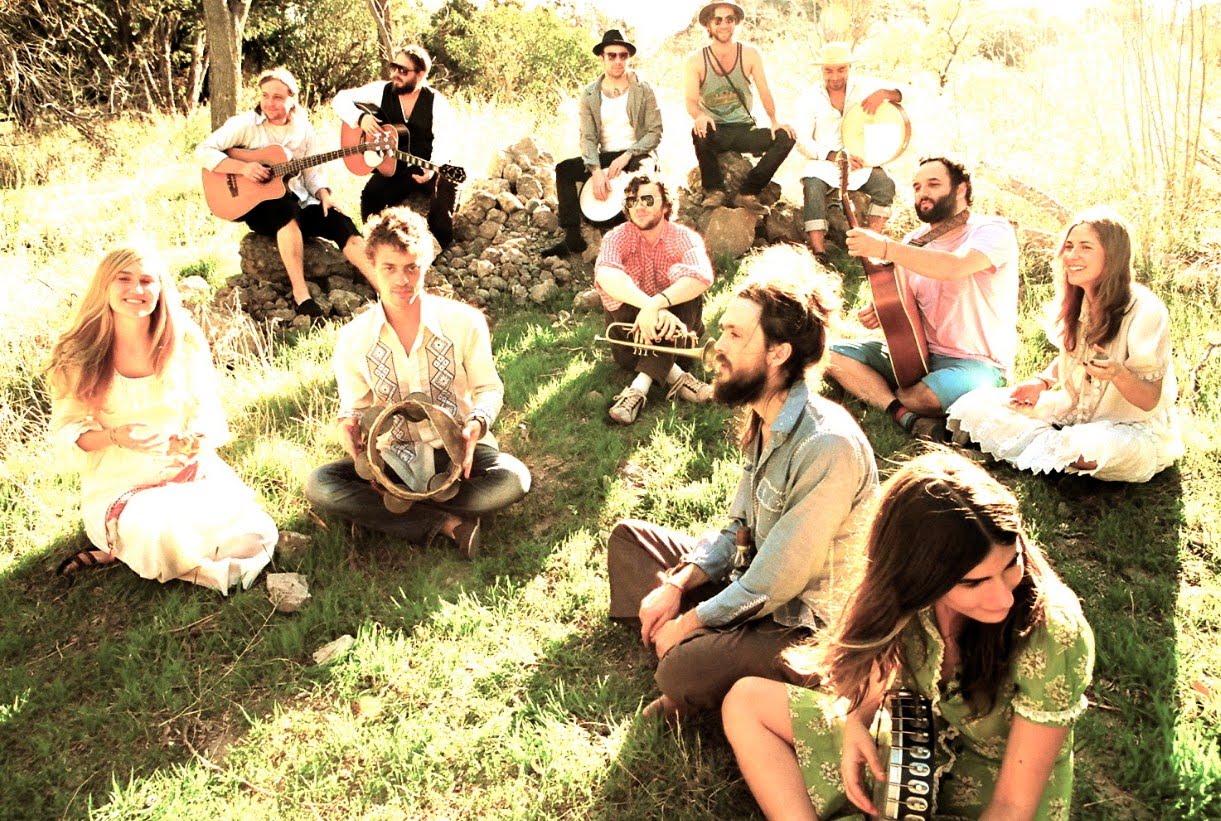
And so returns the neo-hippie band with another great song, “Better Days”. Edward Sharpe & the Magnetic Zeros is an eleven piece band with such a retro, yet authentic sound (Take that Arcade Fire!). The enormous group made a splash with their first album, Up From Below, which contained the vivacious light hearted tune, “Home”.
At first glance, they seem to be your typical California hippie band with free loving messages and rainbow-painted rock songs. Well, you are right about that part, but Edward Sharpe & the Magnetic Zeros has such an outstanding sound that it would be hard to categorize them under all these cliches. To better understand their music, listen to their second album, Here. The reason I say this is because their first album consists only of demos that were written before the band shaped into its solid form. I consider Here to be their first real album, because it has much continuity within it. Here has nine tracks that sound celebratory at times, but they also have a sentimental touch, where songs like “Man On Fire” and “I Don’t Want To Pray” show a motive to leave behind what brings people the most pain, mainly the most controversial issues such as religion and life after death. Call it “hippie” if you must, but Edward Sharpe & the Magnetic Zeros is one solid band that just wants people to dance!
So let’s talk about this track, “Better Days”, off of their upcoming self titled album. To be honest there's not much to talk about, because it is typical Edward Sharpe, with a large vibrant chorus and great instrumentation contained in a unique recording style. The music is inviting and easy to jump into at any time. It reminds me most of their song, “Home”, for all of these examples mentioned, but mostly for the energy that is produced throughout both songs contained in an array of voices. It is a good song, but probably not one of my favorites. I prefer listening to a good mellow tune like “Mayla”. I am, however, looking forward to the new album that releases on July 23rd, because Edward Sharpe & the Magnetic Zeros have yet to disappoint me. I definitely would recommend checking it out when it drops.
While most people this week are probably listening to Daft Punk’s new album with much praise, I’ll be busy celebrating the release of Trouble Will Find Me, the new album by The National, which has me rejoicing greatly. For their sixth release, the band has not sacrificed their strong lyrics for a quick indulging sound. Instead, the exact opposite has occurred: the music is more disjunct and the lyrics are deeper than ever. They are so deep that I had to listen to the album three times before I could even fathom the amount of intensity that is contained.
So what can one expect from The National? Over the course of their discography, the band has recorded with various musicians like Sufjan Stevens, St. Vincent, and Richard Reed Parry. Their albums gradually became more orchestral to the point of being declared a chamber pop band. The music continues to grow larger in sound and instrumentation, but one thing that you will not find in The National’s music is a frequent use of synthesizers. The gradual transformation in their sound encourages the fans to keep coming back, but it also prevents them from getting scared off in the presence of some abrupt change (ex. Radiohead). Regarding the syncopated rhythms and various meters, the band has been leaning this way for some time. It is most present within the b-sides of their previous album, High Violet.
Trouble Will Find Me seems to have elements from the band’s past two albums, but overall it’s quite unique. Matt Berninger spills out the deepest parts of himself throughout this record to the point of questioning his own morality and intentions. His music seems to be a way in which he vents out all his inner conflicts which end up in the form of a story. This incorporates much lyrical continuity within the album that it would be impossible to separate any track from the listing. This is probably why Trouble Will Find Me is one of The National’s longest albums.
One thing that I have learned about all the band’s albums is that none of them can be taken lightly. They are like babies: They constantly need affection and your full attention. As ridiculous as it sounds, it is very true, especially when compared to a band like Daft Punk, where one could zone out while listening and still be able to appreciate the music. Everything keeps moving in Trouble Will Find Me, and one could easily miss out on some great lyrical moments.
There are some pretty rocking songs on this album, however. “Sea Of Love” would probably win the title, but I cannot forget songs like “Demons” and “Graceless”. “I Should Live In Salt” is the perfect album opener, which introduces the narrator’s struggles alongside an epic and inducing melody. “Don’t Swallow The Cap” is deeply emotional, containing many elements of death. “Slipped” sounds like it should be within the deep tracks of Boxer or High Violet. My favorite songs, however are the last four tracks of the album. “I Need My Girl” is an instant classic with its catchy lyrics and bitter tone. It acts as a “Runaway” of this album. “Humiliation” sounds like it starts the second track of Arcade Fire’s The Suburbs; however, the rest of the music is quite unique. It tells a story of a night gone crazy, hence the humiliation. “Pink Rabbits” completes this album with the most beautiful melody and amazing lyrics. Matt Berninger sings, “Am I the one you think about when you sit in your faint chair drinking pink rabbits?”. The album closer is “Hard To Find” which is the ideal track to be placed at the end.
The National tends to build their albums up from beginning to end with the most intense music at the finish line. I greatly admire this technique and it has never failed to please me. Overall, The National is maintaining their reputation as a band with dark and passionate music alongside incredibly deep lyrics. Trouble Will Find Me does not disappoint!
Swedish singer/songwriter Jonas Carping has developed a very distinguishable sound in his new debut, All The Time In The World. The listener can feel at home with the music, while the lyrics are deep, touching, and relatable. For Dylan or Cohen fans, this music would be right up their alley. The songs on this album are simple yet unique, avoiding heavy instrumentation for more intimacy with the listener. Carping’s voice is passionate, ultimately standing alone among others. The ten track album consists of personal stories about troubled relationships, dreams and the reactions that follow. It begins with the song “Left In Here” which confronts the listener with pressing matters: “Still hoping for some change, but I cannot get on out of here”. The track “Underground” is probably one my favorite songs on the album because overall it’s beautiful, catchy, and well arranged. “Anything” is dramatic and almost theatrical, but excluding the chorus, the track can be a little tedious at times. “The Sting”, however, is an amazing song. Originally released as a single, it is the most lively track on the album, with great vocals and arrangement.
“Serenade” is one of the simplest songs on the album, but I believe it has the best lyrics compared to the other tracks. “Rulers” is the short and fast with lyrics that seem to lean more politically compared to other songs. “The One” progresses with a straight foot-tapping beat, and it has a great build up to it from beginning to end. “One More Song” and “Sideways” are bittersweet, with lyrics that seem hopeful. The violin at the end of “Sideways” is beautiful and is a great way to rap up the album. The final track, “Leaving Now”, acts as a ‘last hurrah’ for All The Time In The World. It bursts with authentic drums and fantastic vocals on Carping’s part. The album can drag at times, but overall it is very original. It remains strong and relatable from beginning to end, and each song is unique yet compiled as one. I love Jonas Carping’s voice for the reason that it is spontaneous throughout the album’s progression, and at no times do I grow tired of it. I would definitely recommend this album for anyone who enjoys folk singer/songwriters like Bob Dylan.
The Airborne Toxic Event has been “That bar band that everyone knows”, but really they have held much fame since their self-titled debut album released in 2008. The quintet is most well known for their deep, intimate, and relatable lyrics. Their most famous song is “Sometime Around Midnight”, which depicts a breakdown in a bar scene as the narrator sees his ex-girlfriend happy with another man. Stories like this one define The Airborne Toxic Event. Their third album, Such Hot Blood, was named after an early song of theirs that they felt described how passionate their music sounds. Surprisingly, this album can be compared to their widely acclaimed debut.
Why was their debut such a great album? Because every song is fresh, dark, Professionally made yet spontaneously executed with such intimate lyrics that it is practically impossible to forget them. Every tune is ridiculously catchy, unique and beautiful, which makes the album flow so smoothly. If you don’t believe me then listen to album yourself and see why it made the band so popular.
Unfortunately, everything I said about Airborne’s debut album I cannot say about the one that followed it, All At Once. With songs like “Numb” and “Welcome To Your Wedding Day”, the music overpowers the lyrics that are not that great to begin with. “Changing” is a very catchy song, but it doesn’t even fit in well with the rest of the album. On the other hand, I did like “The Kids Are Ready To Die” and “All I Ever Wanted”, but overall the album is not as fluent and the music is easily forgettable. What bothered me most was how with this album I felt disconnected with the stories of real life struggles.
Now their third album, Such Hot Blood, was the determining factor in deciding whether the band would keep the name that they had started with. What I quickly realized was that this album is their name, or at least what is defined as their sound. Although I’m not a huge fan of the song, “Timeless”, the album as a whole is played out very well, literally getting better from track to track as it progresses.
Such Hot Blood consists of ten songs about life crises, dark emotions, and past relationships, similar to that of the band’s debut. The first half of the album holds all of the group’s previous EP, opening with the vivacious track, “The Secret” and “Timeless”. These songs are not nearly as good as the rest of the album, especially compared to “What’s In A Name?” and “The Storm”. Anna Bulbrook’s violin completes the song “Safe”, while “True Love” would not be complete without the collaborative vocals. “The Fifth Day” is the longest track that stops in the middle to start an amazing buildup that reminded me of the last track, “Innocence”, of their first album. It begins with mere whistling and grows into such an immense sound complete with trumpet. This seems to be the highest point in the album, and one may think how this could possibly progress any further, and then comes the best song in the album, “Elizabeth”, where Mikel Jollett admits that the reason that he doesn’t write love songs is because he never experienced it well enough.
This album offers a great combination of lyrics and music. Some words throughout the tracks are often overly repetitive and the music does sound a little cliche, but Airborne’s music is supposed to be deep and relatable, and indeed it is. I would definitely recommend it to any new or old fan of this band.
Nothing could really show my true excitement for The National’s new album, Trouble Will Find Me. Naturally, I chose to write about one of the pre-released tracks since the album won’t be out for another month. At first, I was expecting the album to be on more of a down slope after having to compete with such success from both Boxer and High Violet. The new album’s first single released was “Demons” which I have yet to warm up to. Then I heard “Don’t Swallow The Cap”, which I immediately favored more, and like every song of The National’s, it sounded better and better with every listen. This reminded me that The National has never failed in making great albums, so there should be no worries about this one.
To me, The National stands out among other bands because of how much depth is in their music. The lyrics are genuinely intimate and open ended for interpretation. Every album revolves around something bittersweet and relatable that they could be considered “cold comfort music”. Alligator references the pains of past relationships, while Boxer best portrays the struggles between social classes. At times, their music can sound almost repetitive throughout their discography, but every album definitely deserves a listen. After all, why change something that continues to work?
As the third track on the band’s sixth album, “Don’t Swallow The Cap” is typical National. From the springing notes to the beautiful chorus, the song is damn catchy. The lyrics continue to amaze me, with the title most likely referencing Tennessee Williams’ death, for Williams has made recurring appearances in The National’s music as a tragic character. The fact that there is lyrical continuity with every album makes frequent listeners feel at home with the new music. It is just as deep and intimate as anything that they have written. My favorite words are at the end when Matt Berninger sings “And if you want to see me cry / Play ‘Let It Be’ or ‘Nevermind’”. If the rest of Trouble Will Find Me continues to express the positive elements displayed in "Don't Swallow The Cap", then this album will deserve its place between great releases like Boxer and Alligator.
Here’s a band that I only discovered recently after hearing about their upcoming second release. I would identify Soft Cat as “Nature Folk” from their previous album, Wild Spaces. Their music is absolutely captivating, especially for anyone who craves for a calm, warming sound that is fulfilled with various instrumentation and arrangement. The songs may sound a bit simpler to some listeners, but everything is artfully placed and meant to be reflected upon. There is so much to take in with the depth of this music and the story that it carries.
For Lost No Labor, Soft Cat is working with the Human Kindness Overflowing Organization to donate a hundred percent of the album’s proceeds to the Whitelock Community Farm in Baltimore, Maryland (The city where the band originated). The generosity of this group of talented artists is inspiring in so many ways. It seems completely natural for this music to be a full contributor to the community.
Lost No Labor is a seven track album, only twenty-five minutes long. I will not deny that every song is in its right place, meaning that I cannot favor one over another. “When It Breaks” begins with gradual introductions of the instruments. It then continues in a swirling motion, eventually meeting with Neil Sanzgiri’s vocals to create a lovely melody. The album moves on to “Sincerity”, a catchy tune that takes its time so one can enjoy every aspect of it. At more than one point the music stops and the listener is left with blissful sounds of nature. “New Waltz” is simply amazing. It starts as a folk-based tune with large bursts of reverb. Eventually, the song turns to a beautiful dance melody (hence the waltz), complete with a saxophone.
The track, “Liminal”, was the first song I heard from Lost No Labor, and even though it is one of the shorter tracks on the album, it may be the catchiest. “All I Can See” is heartwarming and lively with great lyrics. “Goldmines” flows smoothly, mainly with guitar, but then adding occasional bursts of piano, as well as violin, flute and other various instruments. “Us In The Water” is only a minute and thirty seconds long, but between the a cappella entrance and the buildup of instrumentation, it is a great way to close the album.
Lost No Labor drives in a way that makes one feel right at home with the music. The calmness an artful display of it all is brilliantly done. Most importantly, this album carries a sense of refuge in a world that is surrounded by too much gray. Soft Cat says that it’s frightful to live with, but we still need to live on.
Imagine an indie rock band that started out sounding like The Black Keys and four albums later they sound like The Killers. This would be an accurate description of Cold War Kids, who have had their discography shaken up by music critics alike. It almost seems like this band is just going where the industry went five years ago. Perhaps people like to take a few steps backwards now and then. Their new album, Dear Miss Lonelyhearts, is short of the “breakthrough” status that most fans were hoping for, but I can’t say it’s a terrible album. There are some pretty good songs on it.
I really enjoyed Cold War Kids’ first album, Robbers & Cowards, with songs like “We Used To Vacation” and “Hospital Beds”, but all their deeper tracks were solid, catchy, and unique as well. I recall going days straight with “Saint John” stuck in my head. The next two albums would have their high and low points, but never quite like the debut. The band expanded their sound with every release, which seemed to have given them access to ride the “pop train”, but more like the caboose of the pop train, for their music sounds like it would have been played on the radio right alongside The Killers’ first two albums. It would be wrong to compare their new album with their first, because although there still are some similar elements, the albums could be classified under two different sub-genres of rock.
Just over thirty minutes, Dear Miss Lonelyhearts begins with the band’s own thoughts about their current status. Nathan Willet sings, “I was supposed to do great things/I’d know the rule’s law/But I wasn’t raised to shoot for fame/I had the safety on.” The first track, “Miracle Mile”, also a single, is a vivacious tune that opens the album very well.
The song, “Lost That Easy”, introduces a different side to Cold War Kids: a more pop-built one. Surprisingly, it’s one of the better tracks on the album. “Loner Phase” sounds most like The Killers, but “Fear and Trembling” strays from that path entirely. The added saxophone fits in nicely especially when it goes on to solo. I believe that this is one of the more authentic tracks.
“Tuxedos” is soulful tune which is the most relatable both musically and lyrically. “Bottled Affection” is by far my least favorite song on the album, because not only is it much different from the album and terribly placed after a song like “Tuxedos”, but it sounds like the bad side of The Airborne Toxic Event. “Jailbird” is not much better, sounding like every other song on the radio. “Water & Power” and the title track are decent tunes, having more elements of the band’s past works. The final song, “Bitter Poem”, has a nice ending, but for leaving it at thirty minutes, the entire album seems to be just warming up. Perhaps what I dislike most about Dear Miss Lonelyhearts is how musically, there’s no continuity to it. Some songs are very poppy, while others are blues or rock based. Nothing really accents one another and some of the transitions from track to track are a bit rough. This only means that I may not return to the whole album in the future; however, I really enjoyed tracks like “Miracle Mile” and “Tuxedos”, so I would definitely come back to them. I would deem it quality music, but one may just have to dig a little deeper.
Black and white, epic, orchestral, cinematic, apocalyptic drama...These are the words I use to describe Woodkid’s new album, The Golden Age. The debut by Yoann Lemoine is a compilation of immense orchestration and outbursts of sounds that appear throughout the entire album. The title, Golden Age, seems to act as a distraction for what is really about to come, as Lemoine sings in the very beginning, “No I would not believe the light would ever go, but the golden age is over”. The story depicts the struggles of transitioning from childhood to adulthood and beyond, but it is portrayed in a darker setting, revealing the most conflicting experiences in the most dramatic sense.
French native, Yoann Lemoine is best known for his involvement in the production of music videos for pop superstars like Katey Perry and Taylor Swift. A decision led him from making videos to making music as well, but Lemoine is certainly no amateur. All his songs and music videos were made himself.
I was eagerly awaiting this album’s release after hearing various songs from the Woodkid EP. I noted his music as much more mature for a debut. The cinematic form gives his pop music a more sophisticated feel. This should have been Coldplay’s sound by now. Through one listen, I continuously felt the immense force that drives Woodkid’s music which left me only wanting more.
With tracks like “Run Boy Run” and “The Great Escape”, the album will feel triumphant. “Boat Song”, however, is a bittersweet piano tune that gives the album more depth to it. “I Love You” is a continuation of both music and lyrics off of “Run Boy Run”. It is also the poppiest tune on the album.
“The Shore” builds up with a full orchestra to be quite dramatic, but the chorus “Stabat Mater” sounds like it should be played in a battle scene. “Where I Live” is another piano piece that is possibly my favorite song on the album because the lyrics are brilliant and the music is mesmerizing. The most popular track is “Iron” which concludes the music video storyline.
The only problem I have with the album is that Yoann Lemoine does not show much emotion in his singing. At times his casual voice deters the intensity of the music, but it fits in very well with songs like "Where I Live" and the title track. Overall, I would definitely return to The Golden Age again and again, because it is beautifully arranged and full of authenticity. The songs are separate but equal, giving the album a nice flow, but what I enjoy most about this music is the story and how it is represented. This makes The GoldenAge stand out among other albums of its kind.
I had previously reviewed the song “Troubles From So Long Ago” from this band, but now they have released an EP titled At Bay which includes this track as well. Brooklyn’s Wooly & the Mammoth has such a ripened sound that doesn’t feel like they only started last year. As I have stated earlier, the band is a mix of current folk groups. It would be hard to pass their music without wanting to hear more.
“We Are Love” opens the album with much energy, carrying duel vocals by Ian Holubiak and Ali Schilder. The song, “Fallen Down” is an alternate version of the first release. The two recordings are practically the same except for the beginnings. What bothers me about this version is the shouting in the first couple measures, because it has such a random appearance in the beginning that clashes with the rest of the song. Not to mention that it has been done countless times in popular music. “Troubles From So Long Ago”, however, remains untouched from before, which was a better decision. I do believe that this is their more outstanding track. "The Rain Will Come" is catchy and has a very welcoming feel to it, but my favorite song would have to be “Premonitions of War”.The driving force and explosiveness of it all can match that of Mumford and Sons. The final track, “Carry On”, is a lighter tune with a large buildup from beginning to end, which is always a good way to end an album.
It is well worth giving a listen to At Bay because of its steady upbeat feel and catchy tunes. Wooly & the Mammoth is certainly building up to becoming a great band. I look forward to more of their releases.
There are musicians who write songs about love, relationships, breakups, depression, etc. and inspire others to carry on with their scars. Then there are musicians like Soko who permanently embed their lyrics into the mind of the listener, and one cannot help but admire the beauty of it all.
French folk pop artist, Soko, has been at music for some time now. She originally began as an actress, but later wrote music that grew popular in Australia and throughout Europe. Prior to the album’s release, she called hiatus on her music career because she was afraid of the industry (not a surprise). She often stated that she was appalled at the sight of having to change her own music for the sake of money. She came back as a musician, however, and wrote I Thought I Was An Alien.
Obviously I Thought I Was An Alien is not for everyone, especially if you don’t want to listen to a girl sing about her past relationships for about an hour. For those who do, the album could be considered a lyrical masterpiece. Its originality can deter people at times, but the intimacy is what makes the album stand out among others. Within these songs Soko spills out her past, her fears, her hopes and of course her emotions. The music, however, will constantly change. Among the fifteen tracks, many songs will have a wide range of instrumentation, while other songs will consist of a single guitar. At times, everything will fade away leaving nothing but her voice.
Despite having fifteen tracks, the album doesn’t feel drawn out. The songs start around two minutes, but they eventually lengthen to four. The first track, “I Just Want To Make It New With You”, pretty much explains what the entire album is about. Soko occasionally slurs her voice like Jack White does, while the beat sounds like it came straight from the eighties. The title track is delightful and possibly the most joyful song on the album, because most of it is just depressing.
“We Might Be Dead By Tomorrow” is powerful and emotional. It dives into the fact that we waste too much time in relationships and “Soon enough we’ll die”. The most emotionally constraining song, however, is “For Marlon”, where Soko falls in love with an addict and sees that the lover has chosen her over drugs. Immediately following “For Marlon” is the most popular track titled, “First Love Never Die”, which is understandable due to its light feel and relatable lyrics.
The song, “Treat Your Woman Right”, has an eerie feel to it, while “How Are You” is uplifting with its chanting chorus. “Don’t You Touch Me” is explosive, but “Destruction Of The Disgusting Ugly Hate” acts as the highest point of the album, carrying a strong driving force and a catchy refrain. “Happy Hippie Birthday” is a bittersweet tune with a beautiful buildup and an amazing ending.
I do have a couple problems with the album. The main issue is that some of the tracks like "No More Home, No More Love" can lack originality at times. It felt like I was listening to something that I had already listened to. The tracks were well arranged and the sounds fit in with the mood, but the main reason that I would come back to the album is for the lyrics. The other problem is that the songs, “Don’t You Touch Me” and “I’ve Been Alone Too Long” have exactly the same guitar rift and chord progression so they sound very alike in both of the first halves, causing the album to unintentionally repeat itself.
In conclusion, the lyrics are both unique and powerful, which alone is definitely worth giving a listen. What draws me to Soko is the way that she can beautifully portray her most conflicting experiences and have the listener experience them as well.
I do admit that I discovered Alt-J a bit too late since their album was released back in September and they recently won awards from Britain and Australia. It is no surprise since their more popular tracks could easily overpower those yearlong hits you here on the radio. These British natives are working their way to becoming a breakthrough band with an odd obsession for triangles. Alt-J(∆) is the Mac’s delta sign on the keyboard, which denotes change in mathematical equations, but how much change is apparent? Through one listen, I recognized a mixture of rock, folk, pop, hip hop and dubstep, but they go by the genre, “folk-step”. One minute the album will incorporate a bass-dropping pop song to a short melodic piano piece, then with a single guitar-driven tune. This variety makes Alt-J seem a bit more diverse, but it could be that they haven’t found their signature sound yet, or maybe they have.
For a debut album, An Awesome Wave is pretty...well...awesome. It consists of thirteen tracks that include three interludes and an intro. The songs all have their separate stories filled with, love, hate, tragedy and much more. The instruments will vary from time to time which is always good to here in an album. My first impression of An Awesome Wave was a debut consisting only of short pop songs that were just piled together. In reality, the album is solid due to its consistency. Despite the frequent changes in instrumentation and style, the album flows very smoothly for the most part.
The first three tracks seem to belong together in that order. The “Intro” reminds me of the XX’s beginning to their self-titled debut, only because it has a similar atmosphere and buildup. The track is almost the entire album in a nutshell. It then moves into “Interlude I”, an a cappella piece. Alt-J’s harmonized vocals have been compared to the Fleet Foxes’, and the lead singer, Joe Newman, never thought he sang well enough. The only problem I have with his voice is that it will constantly change from song to song, often ranging from Nate Ruess’s to Andre 3000’s.
The song “Tessallate” is more of Alt-J’s signature sound, and it is technically the first big track of the album. It demonstrates the type of musical arrangement where the instruments are carefully patterned and placed, instead of laying everything down to make a big sound with minimum variation. The most popular track is “Breezeblocks”, that sounds like a slower “Hey Ya” by Outkast. It carries vocal harmony and a variety of instruments including the toy xylophone.
“Interlude II” is small guitar tune that is a nice track by itself, but it does not fit in well with the album, especially after a song like “Breezeblocks”. “Something Good”, however, is an amazing song. Between the rapid piano and the steady guitar, the song is inviting and sounds almost soothing. “Dissolve Me” is a song with duel sides to it, sounding as if a folk artist injected periodical bursts of dubstep into the music. “Matilda”, however, is a pretty straightforward alternative rock piece. “Ms” sounds most like Fleet Foxes in the beginning, but it expands with resonating guitars.
“Fitzpleasure” is the second biggest track of the album, which is explosive and catchy, despite the unclarity of the lyrics. The final interlude sounds like it came straight from one of Patrick Watson’s albums. “Bloodflood” is probably my least favorite track, because it seems to be almost a reprise or a filler, which offers nothing more to the album. “Taro” takes a while to pick up completely, but when it does the sound blossoms beautifully. The final track, “Hand-Made” is probably the most intimate part of the album, with soothing guitars and lyrics. Newman sings, “Legions upon legions of craftsmen handmade my feelings”. The song is short and sweet, ending just as the listener grows very comfortable. As annoying as it sounds, it leaves the listener wanting more.
For a debut, An Awesome Wave is catchy, artful, and more original than a lot of albums that integrate separate genres, but it’s not perfect. My explanation is that Alt-J’s current music is more of a mixture than a compound, which is why I believe that they haven’t found their signature sound yet. Their music, however, has gotten my attention. I look forward to hearing more of it as this band progresses.
The Pale Young Gentlemen have stopped making music together, but that does not stop me from acknowledging their previous works. One thing that I like to do is review albums that deserve more credit than they were previously given. Take this band for example. They released two albums in two years and both are very well written and arranged. They are part of a more sophisticated sound, which include elements of classical and pop music (similar to that of Andrew Bird, Arcade Fire, or Patrick Watson). If Great Expectations was a rock band instead of a book, then Pale Young Gentlemen would fit the description perfectly. Their albums are both upbeat and sentimental, expressing bittersweet moments, especially in their second release, Black Forest (Tra La La). The Pale Young Gentlemen’s self-titled debut offered brief, poppy tunes, which for me at least can get a little tiring after a while. The second album enhanced their approach, with twelve tracks that literally switch back and forth from fast and upbeat to slow and unsteady. At times, it does feel conflicting within itself, constantly speeding up and slowing down, but that does not mean that the tracks are unsatisfactory, in fact, they are all quite original.
Black Forest will take you on a wonderful journey, beginning with the song, “Coal/Ivory”, a twisting melody with a steady stride. From there, “I Wasn’t Worried” quiets things down for a bit, but “Marvelous Design” starts things up again with a catchy vibe and a sentimental feel. “Golden Face, Morninglight” sounds like it belongs in a musical, while “The Crook of My Good Arm” is easily the most pop-like track in Black Forest. The song, “Kettle Drum (I Left a Note)” has multiple feels to it, starting out sluggish and then progressing to a more steady beat.
The second half of the album enters with “Our History”, a catchy tune with a beautiful melody. “Wedding Bells” is a good song, but it seems to be the weakest point in the album. It is very simple compared to earlier tracks, and it overall feels out of place with the rest of the album. “We Will Meet” is a beautiful song that takes the album a different direction. The real treasure, however, is in the final tracks, “There Is A Place” and “She’s All Mine, I Think”, which in reality define their sound entirely. It also serves as a last “Hurrah” to the album, which I always enjoy.
Throughout the album, Pale Young Gentlemen’s sound grows deeper and deeper to the point where in the very end a lonely chord is strummed on the guitar and Mike Reisenauer is singing, “She’s all mine, I think”, over and over until the music stops. The meaning of the album is up for interpretation, but to me it is a story about making the wrong decisions through the years that cause one to regret everything later on. In the end however, their is hope for a brighter future.
Overall, Black Forest (Tra La La) is beautiful, despite its weak points. Mike Reisenauer’s voice fits perfectly with the music, and everything else is well balanced and well arranged. It is sad to hear that the band is no longer making music, but they will be missed.
The Pale Young Gentlemen consisted of an entire string quartet, along with drums, piano, guitar, and vocals. The members are brothers Mike and Matt Reisenauer, Gwen Miller, Beth Morgan, and Brett Randall. They hail from Madison, WI.