Search This Blog

Showing posts with label You Should Be Celebrating. Show all posts

Thursday, April 25, 2013

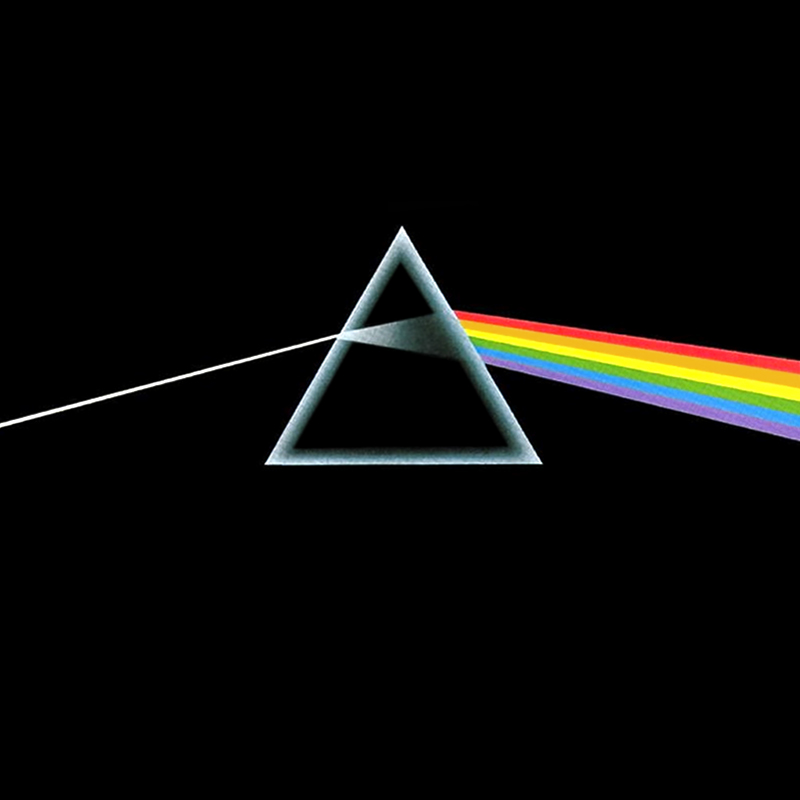
You Should Be Celebrating: Pink Floyd - The Dark Side of the Moon

"Ground control to Major Tom..." Wait, no. Wrong thing.

No matter how magical classic albums throughout popular music history may seem, none were made overnight.

Concept albums align even more to this trend. Not only does the band have to make a cohesive set of quality songs, but it also has to arrange them in a way that displays a unified theme or story. That task can take months or even years to complete. The most successful, and likely the greatest, concept album ever made is Pink Floyd’s “The Dark Side of the Moon,” which is celebrating its 40th anniversary March 1.

Perhaps the nearly universal appeal of “Dark Side” has something to do with its universal themes of conflict, greed, the passage of time, violence, madness, death and mental illness. The album is able to touch on all of humanity’s problems and fears without getting bogged down in details or overstepping its boundaries. The way each track on the album rolls into the next, without the typical two-second pause between songs, contributes to its compelling nature. Every track begs to be played in its correct order, and when this order is disrupted, the result is confusion. Yet there are many more reasons besides novel organization for why “Dark Side” is legendary. The surprising thing is how Pink Floyd got there.

It’s very possible that “Dark Side” or a similar album that might have been a landmark for progressive rock would never have been made by Pink Floyd if the band had been able to maintain its original lineup. The band formed in 1965 with main creative force Syd Barrett on vocals and guitar, Roger Waters on bass, Nick Mason on drums and Richard Wright on keyboards. However, after releasing the classic psychedelic rock album “The Piper at the Gates of Dawn” in August 1967, Barrett suffered a nervous breakdown, and his mental health steadily deteriorated to the point where Pink Floyd had to cancel several tour dates. Guitarist David Gilmour was added in December to cover for Barrett during performances, but Barrett agreed to leave the band a few months later when it became clear that the arrangement was not working.

For the next five years, Pink Floyd was a band in transition. Waters, Gilmour and Wright were suddenly required to fill the huge songwriting void that Barrett had left. Despite this setback, they released six more albums (two of which were soundtracks) that are all critically respected today. They also found themselves delving into highly experimental, then progressive, rock. By 1972 the band had left the sound of “Piper” completely behind with its previous album “Meddle.” One could argue that now was the right time to become very philosophical, not just about Barrett’s deterioration but the arduous journey that had been Pink Floyd. That is exactly what the band resolved to do, performing a version of “Dark Side” (with the subtitle “A Piece for Assorted Lunatics”) live as early as February of that year. It took extensive touring through 1972 and two separate sessions at Abbey Road Studios to get the meticulously crafted album we have today.

A big portion of the greatness of “Dark Side” is the instrumentation, which is splattered with overtures, reprises, augmented chords, time signature changes, soaring solos, and chord changes that are still beautiful even after they are familiar. The whole album possesses a certain gravity and echoing depth, musically as well as lyrically, and though it is generally classified as progressive rock, it borrows elements from the standard 12-bar blues and jazz. Two highlights are Clare Torry’s unhinged belting in “Great Gig in the Sky,” which greatly accentuates the song’s theme of the fear of death, and Wright’s omnipresent synths in “Any Colour You Like,” which are astoundingly fresh 40 years later.

Though great musicality is apparent, Pink Floyd’s experimental history also shows itself, adding unconventional sounds to relatively straightforward rock. The audio samples interspersed throughout the album are recordings of friends and associates who were asked a series of questions, ranging from the everyday “What is your favorite color?” to the more abstract and philosophical “When was the last time you were violent?” followed immediately by “Were you in the right?” Other sounds, such as the cash registers in “Money,” the ringing clocks in “Time” and the kick-drum heartbeat that starts and ends the album provided some of its most iconic moments.

All of these elements add to the emotion of the record and make it downright cathartic and thought provoking. The barely heard line in “Eclipse” — “There is no dark side in the moon, really. … As a matter of fact, it’s all dark” — raises the most questions. All dark or not, Pink Floyd’s musical conception of humanity is a tremendous achievement.


John Guest and Nora Goldberg's article was originally published in Drexel University's independent newspaper The Triangle on March 1st, 2013

Thursday, April 4, 2013

You Should Be Celebrating: The Postal Service - Give Up

"Don't wake me, I plan on sleeping in..."


There may be no feat as improbable in the music industry as making a supergroup equal the sum of its parts. A band that forms with members who are superstars in their own rights is unwillingly raised to high expectations and bound to disappoint somehow. That being said, there are a few bands such as Crosby, Stills, Nash & Young; the Traveling Wilburys (Bob Dylan, George Harrison, Tom Petty, Roy Orbison and Jeff Lynne from Electric Light Orchestra); and Blind Faith (Eric Clapton, Ginger Baker of Cream, Stevie Winwood and Ric Grech from Family) who make good music together. But usually, supergroups are curiosities such the Dirty Mac — consisting of John Lennon from The Beatles, Keith Richards from The Rolling Stones, Mitch Mitchell from The Jimi Hendrix Experience, and Clapton — who performed only once at the Rolling Stones Rock and Roll Circus in 1968. Imagine those legends trying to make an album together; their individual achievements are so distinctive that collaboration might have been impossible.

Cut to late 2001, when Los Angeles indie electronic artist Jimmy Tamborello, who records under the name Dntel, released the album “Life Is Full of Possibilities.” It is a great release, if not spectacular, but the point of interest here is the ninth track of the album, titled “(This Is) The Dream of Evan and Chan.” The song opens with cacophonous and brittle distortion under which pop sensibility is trying to emerge. Then the waves part and the voice of Ben Gibbard (lead singer for Washington state indie pop band Death Cab for Cutie) appears, and everything changes. Gibbard’s lilting melody shines through the surrounding electronics that threaten to drown him out.

At this moment, the album departs from Dntel into something else entirely: a compelling mix of Gibbard’s tenor projecting almost childlike wonder and Tamborello’s chaotic yet melodic production. You can hear the potential in this collaboration immediately. Thankfully, the two artists decided to collaborate further, releasing a whole album together as The Postal Service called “Give Up” on Feb. 18, 2003. In doing so, they produced a musical singularity: a collaboration between artists with promising careers of their own that combines their differing elements so well that it exceeds the sum of its parts.

Of course, Gibbard and Tamborello couldn’t make an album of “Evan and Chan” knockoffs. That song is close to how The Postal Service ended up sounding, but Tamborello strips his production down to something cleaner and crisper on “Give Up,” giving Gibbard more voice in the mix. The opening track, “The District Sleeps Alone Tonight,” makes this distinction very apparent, keeping the core collaboration while adding a syncopated yet polite beat, somber strings, stellar backing vocals by former Rilo Kiley singer Jenny Lewis, and the subtle crackle of worn-out vinyl. Then “Such Great Heights” follows, and all doubt about whether or not this collaboration is fruitful is thrown out the window. The first 40 seconds of iconic darting synths, almost robotic synth bass and a beat so delicate you might mistake it for the swish and patter of feet, show how The Postal Service was able to do more with less.

The rest of the album draws on the same sounds and lyrical themes but is never short of excellent. Even though Gibbard and Tamborello were working on their main projects primarily and had to collaborate via the actual U.S. Postal Service —Tamborello would send Gibbard tracks, which Gibbard would sing over and edit as he saw fit — they put forward some of their best work with this album. Ten years later, there is no doubt that “Give Up” is a landmark of electronic pop music and a wonderfully unique and original take on its genre.

This influence and acclaim does come from the fact of this miracle collaboration, but it has its own merits of songwriting prowess and outright charm. Gibbard’s musings on love and reminiscing are all backed by a pervasive wooziness. The core sound of The Postal Service cannot be described as a dance number or a definite bestseller (though obvious imitator Owl City would parlay its sound into substantial popular success over the last few years), but none of that matters when you hear how “Give Up” is so endearing as a whole. The album is so remarkable that perhaps it’s better that Gibbard and Tamborello leave the legacy of The Postal Service alone. Much to the chagrin of fans, it still looks like the duo does not have an album in the works. But don’t rule it out, considering the duo is going on tour in addition to the 10th anniversary reissue of “Give Up” with unreleased tracks that show this collaboration still works well. Regardless, the comeback of The Postal Service is a testament to the lasting quality of the record that started it in the first place.


John Guest's article was originally published in Drexel University's independent student newspaper The Triangle on February 15th, 2013

Wednesday, February 20, 2013

You Should Be Celebrating: Neutral Milk Hotel - In the Aeroplane Over the Sea

Been 15 years since "Aeroplane" and everyone now knows that this album is HUGE. Your move, Steve
To many great artists, the reward of success comes with the heavy burden of fame. Every new fan, new record sold and new piece of media exposure adds to the pressure and scrutiny. If an artist gets popular enough, it seems as though they never get a moment to themselves. Some may think it would be easy and fun to be idolized and instantly recognized on the street for one’s work, and while there are certainly perks to that fame, it can take a serious mental and physical toll, which is virtually impossible to avoid after an artist reaches the top.

Of course, there are those artists who can handle the glare and maybe even relish it, but there are just as many who find themselves disgusted by fame as soon as they get a taste. Jeff Mangum, the main creative force behind the ’90s indie rock band Neutral Milk Hotel, is part of the latter group. He effectively disbanded the group because it was thrust to the forefront of indie rock so quickly that Magnum was deeply shaken by his own success. That force 15 years ago was “In the Aeroplane Over the Sea.”

The qualms that Mangum likely felt in 1998 are certainly justified, considering the suddenness of the success and peculiarity of the circumstances. Prior to 1996, Neutral Milk Hotel had merely been his solo recording project. His main gig was as a member of Synthetic Flying Machine with Will Cullen Hart and Bill Doss, who had been Mangum’s high school friends. These three friends, along with fellow former classmate Robert Schneider, were already the core of the Elephant 6 Recording Co., which they founded when they moved from Louisiana to Denver in 1991. Even before “Aeroplane,” the loose collective was making a name for itself in the ’90s indie rock landscape. Schneider had founded The Apples in Stereo in 1993, while The Olivia Tremor Control — also known as Synthetic Flying Machine without Mangum — was well respected by 1997. Notables Circulatory System and Of Montreal also became associated with Elephant 6 by the early 2000s.

Still, there’s no question that “Aeroplane” dwarfs every other Elephant 6 release when it comes to acclaim and influence. It’s hard to think of indie rock as a genre without a nasally voiced Mangum doppelganger belting tunes that sound just out of his range. The slightly shaky high-notes in “Oh Comely” and “King of Carrot Flowers, Pts. 2 & 3” became not shortcomings but part of a template which bands would strive to emulate. Mangum’s vocals also worked especially well because they accentuated the vulnerability and sadness that came with his subject matter, of which the biggest inspiration is widely considered to be the story of Anne Frank.

But instead of wallowing in the tragic story that is “The Diary of Anne Frank,” Mangum treats it as an affirmation of life. Lines such as, “And through the music he sweetly displays … made for his lover who’s floating and choking with her hands across her face,” from “Two-Headed Boy,” are sang and accompanied with such gusto that he makes a horrible scene into something cathartic and triumphant. A key reason for the greatness of “Aeroplane” is that Mangum’s passion consistently allows him to combine surrealistic sentiments and frightening details into something uplifting, poignant and transcendent.

Though Mangum is the key contributor to Neutral Milk Hotel’s success and is responsible for the songwriting, the instrumentation of “Aeroplane” contains an entirely new facet of its influence. Mangum forms the typical backbone of guitar (usually acoustic) and vocals, and he has Jeremy Barnes on drums and producer Robert Schneider on bass when he needs him. That’s the extent of the “standard” pop instrumentation on this album. The rest is an array of brass instruments played by band member Scott Spillane, unorthodox organ sounds played by member Julian Koster, and a strange set that ranges from the quirky (banjo, accordion) to the downright obscure (Uilleann pipes, zanzithophone).

No indie band has used such diverse instrumentation, let alone introduced it into its sound so effectively. You can hear how this eclecticism influenced an entire legion of subsequent indie bands, including Arcade Fire, Beirut, and The Polyphonic Spree. But on “Aeroplane,” the way that Neutral Milk Hotel brought together such disparate elements instrumentally as well as thematically is nothing short of brilliant.

That’s what people have been saying for 15 years now, and they’re likely to keep on saying it. As an artist who had languished in obscurity for most of the ’90s, the heaps of instant praise given to “Aeroplane” likely would have shocked and scared anyone who was in Mangum’s position. There’s no question that’s why he abruptly stopped the music and walked off, as he did at the end of “Two-Headed Boy, Pt. 2,” and is only just returning as a solo artist. Luckily, we got to hear an out-of-nowhere manifesto while the microphones were still on.

John Guest's article was originally published in Drexel University's independent student newspaper The Triangle on January 25th, 2013

Monday, February 4, 2013

You Should Be Celebrating: Vampire Weekend - Vampire Weekend

A fancy chandelier: the first thing you think of when you think of an Ivy League party

A common theme throughout popular music history is that artists borrow from other artists. Plagiarism and overt stylistic trends in a slew of bands (see: British Invasion) aside, the influence of other musicians may be an inescapable reality of making music. There are many people who despise that most music is no longer original, but what those people do not understand is that it doesn’t really matter who stole from whom. What matters is how a band takes those sounds and puts them into a novel context with emotional depth. That is how four white Ivy League students are able to appropriate African rhythms and tones into something meaningful.
Vampire Weekend’s debut self-titled album was released Jan. 29, 2008, with XL Recordings. The album was originally released independently in 2007, but received so much hype that they received a record deal and re-released “Vampire Weekend” officially.
From the start, the band Vampire Weekend was both sensational and acutely self-aware. The first collaboration between members of the band was a rap group that included Ezra Koenig and Christopher Tomson while they were still students at Columbia University. The eclectic nature of Vampire Weekend developed in their mutual love of punk and African music, then applied in Koenig’s tour with experimental indie rock band Dirty Projectors. Once fellow students Rostam Batmanglij and Chris Baio joined to form the full lineup in 2006, they made that experimental tendency their driving force. They even gave themselves a tongue-in-cheek definition of their music — “Upper West Side Soweto” — before anyone else could.
With Koenig on vocals and guitar, Batmanglij on piano, Tomson on drums and Baio on bass, Vampire Weekend quickly rose out of the Columbia music scene as a highly anticipated new arrival. The stage was now set for the recording of what would become “Vampire Weekend.” Put together piece by piece from parents’ basements to studio sessions in Brooklyn, self-produced and self-released, the original “Vampire Weekend” CD-R was released in fall 2007. Promoted by lots of Internet buzz and even some print — Spin magazine put them on the cover before they released their debut album — indie label XL Recordings promptly signed Vampire Weekend. “Vampire Weekend” was released Jan. 29, 2008, the only change being the addition of “I Stand Corrected.”
The very nature of the band and its new album made waves in the music world. As the subsequent Internet backlash showed, some people just weren’t ready for the juxtaposition. Though Vampire Weekend adapted its world music influences with the love and care that only aficionados can provide, there were reflexive accusations that the band members were stuck-up, high society frauds. Now that the criticism has subsided, Vampire Weekend’s continuing popularity and acclaim proved the band would not be defined by the contention over its self-titled debut.
The impressive thing about the album is how well Vampire Weekend is able to cram so many refreshing ideas in its brevity. “Vampire Weekend” is a very accessible 34 minutes, making its somewhat challenging fusion all the more remarkable. Even Paul Simon’s “Graceland” is nine minutes longer with the same number of tracks. Yet, regardless of length, it’s hard to deny that the quartet of songs leading off the album (“Mansard Roof,” “Oxford Comma,” “A-Punk” and “Cape Cod Kwassa Kwassa”) are pop perfection. Synthesizers, electronic bass drums and string sections suddenly jump to the forefront every once in a while, reminding you that this album is far from derivative. However, “Vampire Weekend” wouldn’t carry the same weight if the band took things too seriously. It’s the light, breezy and tongue-in-cheek character of their songs that makes the album memorable. Never has breaking barriers amid criticism sounded so nonchalant and carefree.

John Guest's article was originally published  in Drexel University's independent newspaper The Triangle on January 11th, 2013

Tuesday, January 29, 2013

You Should Be Celebrating: Michael Jackson - Thriller

Hee heeee! (Moonwalk)

If you’ve been reading my column this year, you may know that I tend to jump between genres. One week I’m talking about The Doors, and the next week I make a huge left turn to Aphex Twin. In my defense, I enjoy covering and listening to popular music of all kinds, but as a reader I can imagine that it may be disorienting.  Perhaps this is why I’m excited that my final article of 2012 picks up where my previous one about “Saturday Night Fever” left off. That album and this week’s “Thriller” are two gargantuan peaks of pop music that occurred within five years of each other. Both reached multiplatinum status and received rave reviews from critics. But where “Saturday Night Fever” popularized a well-established genre, “Thriller” was the catalyst for a pop revolution that continues to influence many.
Becoming the King of Pop is no easy task, but that’s the title rhythm and blues singer Michael Jackson acquired after releasing “Thriller.” Jackson was likely a household name even before “Thriller,” but the album itself has entered the exclusive club of household albums. To call the album a commercial success is a vast understatement. In the U.S. and many other countries worldwide, it was the best-selling album of 1983 and 1984. Seven of the nine tracks from “Thriller” ended up becoming top-10 U.S. hits. Today, “Thriller” is the highest-selling album of all time, with at least 65 million copies sold worldwide. Factor in the incredible moments surrounding the album — including the Moonwalk on the “Motown 25” TV special, the iconic trio of music videos and becoming the first major black artist on MTV — and it is clear that “Thriller” quickly became a culturally significant document.
If anyone could handle the glare, it was Jackson, who already had seven solo top-10 singles (and seven more with his family R&B group, The Jackson 5) and a platinum album in “Off the Wall” to his name. Years of strict discipline from his father and immense raw talent had made Jackson a superstar, yet he still felt underappreciated. In the early ’80s, black artists couldn’t get on the covers of magazines or air  on MTV no matter how popular they were. Jackson sought not only to break that racial barrier but also to become the biggest musician in the world. He succeeded on both counts, but that success came at a great personal cost. Jackson experienced a deep sense of loneliness during the recording of “Thriller,” and his remaining career was somewhat marred by the pitfalls of fame. Some of the best songs (“Billie Jean,” “Wanna Be Startin’ Somethin’” and the title track) carry a strong undercurrent of paranoia and fear, whether it’s dealing with an obsessed fan or rumors spread by the media. Yet even in light of his personal tragedy and untimely demise three years ago, “Thriller” has lost none of its luster and never feels burdened by its emotional heft.
Ultimately, the greatest accomplishment of “Thriller” is its singular vision. “Off the Wall” is classic, but it’s a disco album overall. Jackson’s follow-up is funkier, edgier and more vulnerable, playing into the strengths of his more mature and confident voice. Essentially, it’s the sound of pop’s future. Pick any contemporary R&B or pop singer, and you can likely draw a straight line back to “Thriller.” However, there’s a good reason why everyone from Justin Timberlake to Rihanna reads from the album’s blueprint: It is arguably the most expertly crafted pop album you will ever hear. Take “Billie Jean,” where Jackson patiently sets the scene — first the foundational drumbeat, then the propulsive bassline, then finally somber staccato synthesizer before he starts to sing the verse. Jackson’s incredible delivery is then punctuated with all types of accompaniment — funky rhythm guitar, dramatic string lines, moody synthesizers, etc. — that blend seamlessly into the mix and bring out the raw emotion of the song.
Legendary producer Quincy Jones and songwriter Rod Temperton (of the title track, most notably) certainly play a role in the pop expertise of “Thriller,” but considering that Jackson wrote most of the big singles (including “Billie Jean”), it’s clear that he was leading the charge. The surprising diversity of the record, which has gritty rock crossovers (“Beat It”) as well as delicate ballads (“Human Nature”), is equally impressive and ensures that “Thriller” has a broad appeal. There are clear risks that Jackson took, but the attention to detail is so strong that he never sounds like he’s biting off more than he can chew. In short, the album is a masterpiece, one that challenged pop convention and eventually became a driving force in its creation. It’s hard to be more thrilling than that.


John Guest's article was originally published in Drexel University's independent student newspaper The Triangle on December 7th, 2012. Did you hear we had a Facebook? http://www.facebook.com/FrogsOnALog

Wednesday, December 5, 2012

You Should Be Celebrating: Various Artists - Saturday Night Fever Soundtrack


When it comes to a genre’s move from the underground to the mainstream, there are always growing pains. The original instrumentation and overall feel can rapidly change so that the best qualities of the genre become lost or muddled (see dubstep as a current example). Some fans who adored the genre at first lament that its artists become too accessible and too popular. Furthermore, a genre’s reign on top is usually short lived because the taste of consumers can rapidly change if something refreshing and exciting comes along. Despite this roller-coaster ride, there’s no denying that the genre had redeemable and aesthetically pleasing qualities if it got so popular in the first place. This ride describes disco perhaps more than any other genre, considering its meteoric rise and fall in the late 1970s. Thirty-five years later, we can ultimately point to “Saturday Night Fever” as the beginning of disco’s mainstream popularity.
The origins of disco are actually local, stemming from the club-going counterculture in late ’60s and early ’70s Philadelphia and New York City. In many ways, the genre was an adaptation of classic soul with features of psychedelia as interpreted by the black, Latino and gay communities of these cities. The genre quickly evolved beyond its roots, as DJs developed the “remix” and started to define the disco sound every weekend in the clubs. The fundamental instrumentation — four-on-the-floor drum pattern, eighth-note open hi-hat, syncopated bass line and lavish orchestral or keyboard accompaniment — is iconic, and its influence and innovation can still be heard on the radio. Yet even before that sound crystallized, the genre was gaining commercial traction with songs such as “Soul Makossa” and “Kung Fu Fighting” in the early ’70s, and the television show “Soul Train” featured the disco sound. Still, the genre was underground music, only popular within an urban subculture. In order to achieve true popularity, an act more marketable needed to bridge the gap.
Enter the Bee Gees, a pop trio of brothers who rode a danceable disco style to commercial success in the mid ’70s. “Saturday Night Fever” producer Robert Stigwood, who needed a hit disco soundtrack for his movie to be a blockbuster, approached the Gibb brothers (Barry, Maurice and Robin) to write original material for his movie, which was already in post-production.
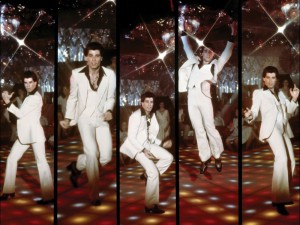
The Bee Gees agreed, and with only a vague idea of the movie’s concept, they quickly wrote four No. 1 hits, including “Stayin’ Alive,” “Night Fever,” “How Deep Is Your Love” and Yvonne Elliman’s “If I Can’t Have You.” The Bee Gees-led soundtrack skyrocketed to the top of the charts, spending 24 weeks at No. 1 in 1978. The album’s terrific track listing, as well as John Travolta dancing in his white jumpsuit, signaled the beginning of disco’s mainstream popularity. In a matter of months, disco went from a bubbling undercurrent to a major pop-culture phenomenon.
All the popularity aside, “Saturday Night Fever” is a brilliant move on the part of Stigwood. As he predicted, the movie introduced the extravagant and escapist disco sound and lifestyle to a much larger audience. It was a bold move for the artists involved, especially the Bee Gees. Defining a genre is no easy task, but the artists involved and included on the soundtrack provided a terrific gateway. The true achievement of the soundtrack is that it shows both disco’s star power and its compelling diversity.
There are disco versions of classical pieces (“A Fifth of Beethoven” and “Night on Disco Mountain”) that seamlessly integrate orchestral arrangements into the main framework. On the other hand, syncopated salsa rhythms and dramatic horn sections reverberate through tracks such as “Open Sesame” and “Salsation.” MFSB’s “K-Jee” even manages to combine these two disparate influences, creating something both lush and funky.
Thankfully, “classic” long-form four-on-the-floor disco closes the album with The Trammps’ blistering 11 minute “Disco Inferno.”
Of course, the work of the Bee Gees on this album cannot be ignored. While not pure disco, the strutting “Stayin’ Alive” and the slinky “Night Fever” brought fresh new fervor to an already innovative genre.
Though the Gibb brothers were never a part of the original community that defined disco, they inhabited its musical territory convincingly. The genre would fall out of favor by the end of the ’70s, but “Saturday Night Fever” is a timeless distillation of disco that ensures it will live forever.

John Guest's article was originally published in Drexel University's independent student newspaper The Triangle on November 16th, 2012

Monday, November 26, 2012

Mark’s Pick of the Week: Françoise Hardy by Françoise Hardy


           It’s not often that I get to do a “Pick of the Week” AND a “You Should be Celebrating” all in the same post, but since I can type faster then both John and Steve I get to be the one to talk about one of my favorite albums of all time: Françoise Hardy’s debuted album (aka The Yeh-Yeh Girl From Paris in the US).

            I discovered her accidentally.  A friend of mine sent me one of her singles from another cd, and decided to check out some of her other stuff.  I decided to start with her first album, and was blown away by how great this relatively simple pop music is. 
            That week I basically listened to nothing else, and during one of these repeats I asked a friend in my dorm to listen to it.  He stood there for about ten seconds, asked if it was French, and then said he only listens to music in English.  I don’t tell you this to put down my friend (he’s actually turned me on to a few really good artists,) but instead to kind of make a point.  The Beatles recorded only two songs in a language other then English (two of their early singles in German) and yet they are known all around the world.  This French artist records over two albums in English, and still she isn’t very well known here. 
            I say that because she’s very well known in France as an actress, singer, fashion icon, loved by many English speaking songwriters including Bob Dylan and Mick Jagger, as well as worked with the likes of Blur and Iggy Pop. She also has probably has sung several songs in tv or movie montage that took place in France.  Just picture a French song and see if this doesn’t match up.
            I’ve never listened to one of her recordings in English and I never intend to.  Every syllable coming from Ms. Hardy is laid in such a way that it would seem a grievous crime to hear it in any other language then the one it was conceived in.  Even though I don’t know what the lyrics mean, word for word, the feelings and images I get from these songs is more then enough.  
No thanks, I'll stick with the original 
            This month marks the 50th anniversary of this album.  It’s interesting to think this album came out 5 months before Please Please Me.  Now I’m not knocking that album, but I wouldn’t say that’s the Beatles’ strongest work.  This album not only still shines through after 50 years, but remains as one of my favorite pop albums.
            If you like this then I’ve got good news.  She’s been putting out music for the last 50 years so there’s no shortage of music for you to check out. You can check out her website here.


Check out the blog on facebook for more album reviews, music news, and band interviews
            

Friday, November 16, 2012

You Should Be Celebrating: Rage Against the Machine - Rage Against the Machine


When music and politics collide, their relationship tends to be fiercely antagonistic. Artists who have a strong political viewpoint will be critical of the government — whether or not they have the legal freedom to do so — if they disagree with its actions or leanings. Wars (especially the Vietnam War), racial injustice (the charged lyrics of Public Enemy) and the establishment in general (The Clash, The Sex Pistols) have all been topics observed with a critical eye in the form of protest songs. As you can see, sometimes a musical group has such a strong political viewpoint that its ideology becomes synonymous with the band itself. It makes sense that the bands that are politically aggressive are also musically aggressive. Twenty years ago this month, Los Angeles rap-metal quartet Rage Against the Machine arguably set a new standard for this combined aggression, debuting a devastating and uncompromising new sound.
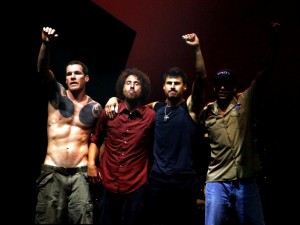
[/media-credit] Rap-metal group Rage Against the Machine broke the barrier in the music scene with their politically driven music. The band debuted with their self-titled album twenty years ago this month.
The genres of rap and metal were considered wildly disparate. Virtually everything from the instrumentation to the sociopolitical origins can hardly be farther apart. However, the pure forms of these genres were starting to blend by the late ’80s as rap groups such as Public Enemy, Run-D.M.C. and Beastie Boys flirted with rock influences. Still, the barriers between rap and metal held fast. Until Rage Against the Machine came along, that is. In 1991, guitarist Tom Morello and vocalist Zack de la Rocha met at an LA club where de la Rocha was freestyle rapping. Soon, Morello asked de la Rocha to form a band with him, and de la Rocha agreed. Morello contacted drummer Brad Wilk, who had auditioned for Morello’s former band, Locked Up. De la Rocha convinced his childhood friend, bassist Tim Commerford, to make the quartet that was soon christened Rage Against the Machine.
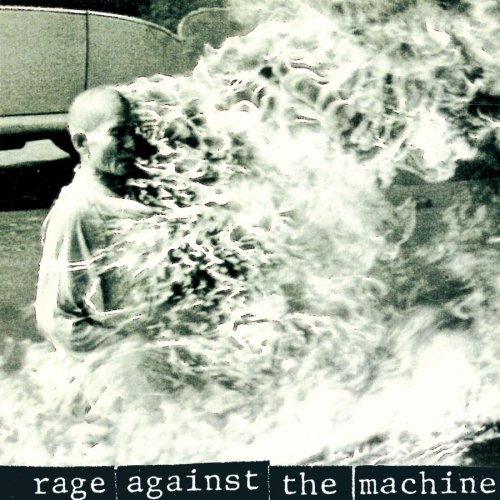
As the title of this new band suggests, the four group members implicitly agreed on a staunch leftist political ideology. RATM would soon be notorious for its unflinching political criticisms that came to define the band as much as its songs. Even the cover art of the debut album was the self-immolation of a Vietnamese Buddhist monk, an iconic image of protest in the face of religious persecution. After vocal support of the Zapatista Army of National Liberation in Mexico, a stunt on Saturday Night Live involving inverted American flags and denouncements of political figures — including lambasting vice presidential candidate Paul Ryan, though he likes their music — it is clear that these guys have stayed true to the rage in their name even after 20 years.
Of course, you do not need to know about these incidents to tell that these four young men are channeling their political anger. “Bombtrack” starts the self-titled album with a bang, de la Rocha claiming his thoughts are those of a “militant mind, hardline, hardline after hardline.” His rapping, as on the rest of the album, is so intense and in-your-face that you can practically feel the hatred radiating off of him. He’s a powder keg waiting to explode, unleashing primal screams when he just can’t take it anymore. Morello, Commerford and Wilk are right there with de la Rocha, complementing every radical outcry with another jagged riff and powerful groove. “Killing in the Name” ends with the band rising to meet de la Rocha’s defiant refrain, “F— you, I won’t do what ya tell me,” while “Freedom” takes the furious scream of “Freedom, yeah right,” to a new high when the band descends into utter chaos to close the album.
The greater implication of “Rage Against the Machine” is that de la Rocha’s politically charged rap aesthetic worked extremely well with the band’s relentless hardcore punk-metal foundation, a combination that no one had been able to accomplish.
RATM’s successes made rap metal a commercially viable genre, paving the way for popular acts such as Limp Bizkit and Linkin Park. Yet it is still RATM by far with the most critical acclaim, of which “Rage Against the Machine” is a substantial part. The most incredible characteristic of the band’s debut album is Morello’s guitar playing, which turns standard Zeppelin-esque metal riffs into something otherworldly. From the whistling noises in “Bullet in the Head” to the low murmurs of “Fistful of Steel,” Morello continually thrills with sounds you wouldn't believe came out of his instrument.
Luckily, the guitar playing does not distract the band from delivering its message, showing surprising discipline for a band that only formed the year prior to the album’s release. As a whole, they navigate the unconventional song structures and changing tempos that are prevalent on “Rage Against the Machine” with breathtaking skill, making a funky breakdown transition seamlessly into a chugging groove and then back again. A debut album is usually the time where a band can be uneven, especially when helping to define a genre, but not RATM. Their sound, along with their anger, came fully formed and ready to — as Morello’s most famous guitar reads — “arm the homeless.”

John Guest's article was originally published in Drexel University's independent student newspaper The Triangle on November 2nd, 2012

Saturday, October 27, 2012

You Should Be Celebrating: Stevie Wonder - Talking Book


In the career of any musician, talent usually comes before artistic credibility. This trend is especially true for artists who sign to a major label and are marketed to be pop stars. Think Justin Bieber, who was discovered through a series of YouTube videos and is now a teen pop superstar but is not someone who has much credibility as a songwriter or musician. He may get there, but not when he’s still hiring songwriters to do the brunt of the work, as on this year’s “Believe.” However, Bieber’s situation is far from unique. One of the most famous pop artist factories is the Motown label. From 1961 to 1971 the label scored 110 top-10 hits from legends such as Marvin Gaye, The Four Tops and The Temptations, to name a few. They accomplished this feat by signing great talent but also by running a tight ship. With a team of world-class songwriters, producers and session musicians, label founder Berry Gordy knew his stars had no room for artistic ambition of their own. Yet, as Stevie Wonder — the label’s youngest talent — started to grow up, he got ideas of his own.

In 1961, Ronnie White of Motown’s The Miracles first heard the 11-year old Wonder at a friend’s house, and his prodigious talent was immediately recognized. Wonder was signed to Motown’s Tamla label that year and had his first hit with “Fingertips (Pt. 2)” in 1963 as Little Stevie Wonder. By 1965 he dropped the signifier, his voice matured, and the hits still kept coming. Wonder was honing his songwriting craft, co-writing classics such as The Miracles’ “Tears of a Clown” and his own “Uptight.” Already a gifted harmonica and piano player, Wonder eventually started overdubbing his own drum parts and recording albums independently while still making hits. By the time his 10-year contract with Motown expired in 1971, Wonder had a strong case for his talent and artistic credibility. Gordy re-signed Wonder, giving him creative control and musical rights unheard for Motown.

The re-signing marks the beginning of what is considered Wonder’s classic period, a four-year string of critically and commercially successful albums. Instead of copying Motown’s formula of using full-lengths as mainly promotional tools for the big hits, Wonder explored social and political themes in addition to his usual romantic subject matter. “Music of My Mind” is technically the first album of the classic period and a sign of things to come, where Wonder was both the main musical (he played his own drums and bass) and artistic (he wrote or co-wrote every song) force behind his albums. However, it was later in 1972 that Wonder first made his mark on popular music with “Talking Book.” Wonder again showed his talent by writing or co-writing (with his then-wife Syreeta Wright) and overdubbing to the extent where three of the songs (“You and I,” “Big Brother” and “I Believe”) only have instruments played by Wonder. This time, his songwriting prowess — something he had no doubt been practicing for 10 years — is even more apparent, and the music world responded with multiple accolades for the 21-year old’s masterstroke.

“Talking Book” deserved its initial praise and popularity because it is only classic rhythm and blues on the surface. The rest is a diverse blend of influences that uses its elements to terrific effect while also sounding completely original. Take the bossa-nova drum beat on “You Are the Sunshine of My Life” and the Hohner Clavinet on “Superstition” and “Maybe Your Baby.” Though these were not completely novel, they had never been used to make R&B as smooth as “The Girl from Ipanema” or as funky as Funkadelic’s “Maggot Brain.” At the same time, Wonder was the first prominent black musician to use bass and lead synthesizers, elements still common in R&B 40 years later. The result was a refreshing and original sound that appealed to R&B and rock ‘n’ roll fans. Wonder actually toured with The Rolling Stones in 1972 before “Talking Book” was released and featured blues guitarist Jeff Beck on “Looking for Another Pure Love,” showing he could play to those audiences with no qualms.

The bottom line is that “Talking Book” is the sound of a legend coming into his own and thrilled to finally be in complete control of his product. The brilliant onslaught of keyboards is also complemented by Wonder’s terrific voice and gift for melody, where on this album he may be at his finest. Every song has an earworm, be it the stadium-ready chorus of “I Believe,” the intimate opening lines of “Sunshine,” or the focused and forceful verses of “Superstition.” Come to think of it, there’s hardly a wasted note. Forty years later, “Talking Book” is nothing short of an electrifying, big “first” statement from a wondrous talent.


John Guest's article was originally published in Drexel University's student newspaper The Triangle on October 26th, 2012

Friday, October 19, 2012

You Should Be Celebrating: The Streets - Original Pirate Material

The genre U.K. garage (rhymes with carriage when using the British pronunciation) came about through the introduction of Chicago house music in London in the early 1990s. Soon it became house’s restless younger cousin, with faster tempos and skipping rhythms. The genre has since been warped and succeeded by offshoots such as Grime, 2-step and dubstep, but in the late ’90s, U.K. garage was a strange mix of commercial relevance and underground presence. Garage duo The Artful Dodger had four top-10 hits in the span of two years but also released several mixtapes around that time. One of the artists featured on those mixtapes was The Streets. The garage and hip-hop project led by Mike Skinner was a little late to the London scene but quickly became its biggest star with his debut album, “Original Pirate Material,” released in the U.K. in March 2002 (the U.S. release wasn’t until that October).

In the late ’90s and early 2000s, U.K. garage and its offshoots had reached their commercial peak and were becoming stale. The genre had its roots in nightclubs and mostly stuck to that subject matter. At the same time, it had been mixed with U.S.-style hip-hop, but the two elements had not gelled. From the get-go, Skinner took a much different tact. To start, he spent most of the ’90s moving to and from London trying to get his big break. Skinner had plenty of experience as a struggling inner-city musician during this time, attempting to form a record label while working at fast-food restaurants. In 2001, Locked On Records discovered Skinner through pirate radio and released “Has It Come to This?” on the label. The song is far from typical U.K. garage; instead of partying, Skinner reflected on the decaying urban neighborhoods and related lifestyle that he inhabited. A somber, twinkling electric piano line and sudden bursts of chopped vocals make the backing track both reserved and cinematic. The music media — most notably the famous U.K. magazine NME — quickly hailed The Streets as a great new arrival, and the hype began to build.
Artists who find that their work is highly anticipated overnight usually do not live up to the hype. After all, one song does not make an artist great. Yet the hits kept coming, as three more singles (“Let’s Push Things Forward,” “Weak Become Heroes” and “Don’t Mug Yourself”) cracked the U.K. top 40. Now, no one could deny that The Streets were much more than a one-hit wonder. The Streets’ recording career would only last 10 years (Skinner officially retired the project last year), but it was immediately clear that he had found something refreshing and original. The first thing you notice about “Pirate Material” is the aforementioned musings and stories about “street” life. Sometimes Skinner is the protagonist or playing a character (Tim in “The Irony of it All”). Other times he is literally the streets, carefully observing and commenting on the crumbling surroundings. No matter the angle Skinner takes, it feels authentic and emotionally resonant. As a result, “Pirate Material” is sad, funny and triumphant all at once, displaying complicated emotions associated with his experiences as an inner-city youth. Of course Skinner parties, smokes weed and plays video games, but the grim reality of the streets always threatens to crush him.
Another factor in the greatness of “Pirate Material” is its stunning ability to incorporate elements of hip-hop into U.K. garage. To call Skinner a rapper is very misleading, especially in the stylized American sense of the word. He is not charismatic or boastful, nor does his phrasing particularly follow his beats. Instead, Skinner takes a conversational tone and runs with it, creating his unique take on rap and beat poetry where every guy is a “geezer” and every girl is a “bird.” Many hip-hop fans are probably scoffing at that idea right now, but his style grows on you. It helps that his down-to-earth lyricism and recognizable sound — in part due to the do-it-yourself nature of “Pirate Material” — give the listener something to latch on to. Finally, the percussive Garage beats and elegant piano lines or string swells (“Weak” and “Turn the Page,” respectively) give Skinner a wonderful foundation that was quite unique for its time. As a whole, the album is electrifying 10 years later and stands as Skinner’s quintessential statement. As “Let’s Push Things Forward” suggests, he was going all out with “Pirate Material,” pushing the boundaries of his genre with great success.

John Guest's article was originally published in Drexel's student newspaper The Triangle on October 19th, 2012

Friday, October 12, 2012

You Should Be Celebrating: Radiohead - In Rainbows


There are few bands that manage to define a music genre, but when they do, they pave the road for bands to come. Alternative rock band Radiohead paved the way for countless alternative rock bands and created a musical niche of its own because of its unique, cutting-edge sound.
Now I won’t get too far into Radiohead’s illustrious career, but with the release of the band’s sophomore album “The Bends,” the band — formerly a one-hit wonder with the song “Creep” — burst into the limelight. The twin masterpieces of the titanic “OK Computer” in 1997 and the digital alienation of “Kid A” in 2000 followed, confirming the band’s greatness. But fast-forward to the mid-2000s and you could argue that Radiohead was starting to decline. They had released “Amnesiac” and “Hail to the Thief” to acclaim but not to the level of their predecessors. Having completed their contract with EMI, they went on hiatus. For the first time, the quintet of vocalist Thom Yorke, guitarists Jonny Greenwood and Ed O’Brien, bassist Colin Greenwood, and drummer Phil Selway were taking a break.
The band had written songs, some of which would end up on “In Rainbows,” but couldn’t figure out what to do with them. Early studio sessions with producer Mark Stent instead of longtime producer Nigel Godrich were deadlocked. Yorke announced his debut solo album, “The Eraser,” in May 2006, shortly after the yearlong Stent sessions proved fruitless. The situation appeared so dire that Radiohead’s own management suggested that the band break up. Luckily, Radiohead didn’t listen. Instead, they decided to test their new, unfinished and reworked material on the road. It was an ingenious move for a generally insular and studio-oriented band, and it showed that “In Rainbows” was going to be different right down to its foundation.
The band returned in October 2006 with plenty of material to record, produced by Neil Godrich once again. So many songs were developed that an eight-track bonus disc of songs from the “In Rainbows” sessions was released 18 months after the original album. There was just one problem: Radiohead no longer had a record deal, let alone a major label such as EMI. The usual guidelines of promotion and distribution were useless for “In Rainbows.” A normal band would likely cave and sign a deal, but Radiohead knew how to use one force that had put the mainstream recording industry in steep decline: the Internet. To quote Yorke in an interview with Wired: “Every record for the last four — including my solo record — has been leaked. So the idea was like, ‘we’ll leak it, then.’”
This idea became the “Pay-What-You-Want” model for the initial release of “In Rainbows” in October 2007. Fans could get the album from Radiohead directly through the Internet and pay whatever they want (or nothing at all). They could also pre-order a hefty vinyl release at a steep price. The experiment was groundbreaking and opened new avenues for the Internet as a music-sharing entity. The band did eventually follow through with a physical release, but it was with TBD Records, a tiny imprint that had formed in the summer of 2007. Essentially, the band had found the antithesis of selling out. The bold distribution move sparked such a debate that an ordinary album might be overshadowed.
Thankfully, “In Rainbows” has lasted not just as an economic curiosity but as a standout record, even in Radiohead’s cluttered catalog. The album follows the lead of “Thief” in its return to guitar-led songs. The hyperactive yet haunting “Bodysnatchers” ranks among the fastest and loudest songs in Radiohead’s history. “Weird Fishes/Arpeggi” and “Jigsaw Falling into Place” fall into a similar up-tempo vein with ghostly vocals, a combination that Radiohead manages to make sound strangely beautiful. However, there’s another feeling on “In Rainbows” that is very unusual for Radiohead: warmth, sometimes influenced by rhythm and blues. Sure, the band is still about social alienation and ominous atmospherics, but those landscapes are no longer as jagged. In fact, they can be quite comforting, as in “House of Cards,” where Yorke cryptically describes a sexually intimate relationship. Who knew that Radiohead would make a song where the line “Infrastructure will collapse” is vaguely sensual instead of apocalyptic? “Nude” makes a similar juxtaposition with lyrics about not getting any big ideas, but it then takes off with a series of circular, wordless coos from Yorke.
Perhaps the most satisfying thing about “In Rainbows” is the knowledge that the band can go in several different directions at any time, be it a three-guitar attack or fractious, digital pseudo-R&B centered on Selway’s impeccable rhythms and Yorke’s ethereal falsetto. This album distills those possibilities with new colors added and new ways to explore their sound. The fact that nearly 15 years into their career, Radiohead was able to surprise yet ultimately be rewarding is quite an accomplishment. After all, the band has never strayed from its niche, no matter where it has been on the spectrum.

John Guest's article was originally published in Drexel's student newspaper The Triangle on October 12th, 2012

Friday, October 5, 2012

You Should Be Celebrating: Guns N' Roses - Appetite for Destruction

It’s been said that musical influence occurs in cycles of 20-25 years, creating a direct line between past and present. Consider the prevalence of synthesizers originally heard in the ’80s that dominate popular music today, not to mention the frequently made connection between Madonna and Lady Gaga, whose careers emerged roughly 25 years apart. Rock is certainly not immune to this trend. Even though the genre has had its share of stylistic twists and turns over the years, some cycles are very clear. Take a raw, late-’80s hard rock quintet from Los Angeles that simultaneously recalls The Rolling Stones’ bad-boy attitude, Led Zeppelin’s heavy riffs and Aerosmith’s flair. That description of Guns N’ Roses is a little roundabout, but it’s an apt one. The good thing is that the band is not derivative of any of its influences. In fact, it takes each to the extreme, sparking a fierce new sound that is at its best on “Appetite for Destruction.”
In many ways, Guns N’ Roses was a perfect storm that went from nowhere to the top in the crowded field of mid-’80s glam metal. The band was originally formed as a combination of L.A. Guns and Hollywood Rose, two bands that were aspiring for greatness on the Sunset Strip scene in Los Angeles, practically the epicenter of glam metal. Lead singer Axl Rose and rhythm guitarist Izzy Stradlin came from Hollywood Rose and lead guitarist Tracii Guns, bassist Ole Beich and drummer Rob Gardner came from L.A. Guns. Thus, the original lineup — combined right down to the new band name — of Guns N’ Roses was born. However, this was not yet the “perfect storm.” After playing a couple shows, the L.A. Guns members were replaced for various reasons by lead guitarist Slash, bassist Duff McKagan and drummer Steven Adler. Slash was probably the key to these changes because he had played in both Hollywood Rose and Road Crew, which had included McKagan and Adler. In any case, the group created quite a buzz playing at famous L.A. clubs, had an EP released by late 1985 and was soon signed by Geffen Records in March 1986.
By the end of 1986, the band was in the studio making what would become “Appetite for Destruction.” The songs were a strange mix of previously written ideas (“Rocket Queen,” “It’s So Easy”) and sudden bursts of inspiration (“Welcome to the Jungle,” “Sweet Child O’ Mine”) that included future key tracks such as “November Rain.” The sessions were filled with 18-hour days from producer Mike Clink, hours of overdubbing and structuring solos from Slash, and nights where Axl Rose cut and spliced tape until sunrise. Heroin addiction plagued every member — a fact that was addressed in “Mr. Brownstone” — but it only seemed to fuel their fire. Everything about the recording sessions suggested that Guns N’ Roses had captured lightning in a bottle. So the album was an immediate smash hit, right? Actually, when the album was released July 21, 1987, it did not make a commercial dent. The original cover art — a surrealist painting with a robot rapist and a grotesque, vengeful monster — had something to do with initial poor sales when it was deemed too controversial. However, the now-famous depiction of the band members in a skull-and-crossbones formation is arguably more fitting. Not only would the album bounce back, but it shows that the band is literally resurrecting rock ‘n’ roll.
It took a while, but Guns N’ Roses more than made up for lost time. The rollicking first single “Welcome to the Jungle” was unsuccessful, but Geffen got MTV to play the music video once on a Sunday at 4 a.m. That was all the promotion the band needed, for the song started a groundswell of support from hard rock fans that led to its inclusion in the final Dirty Harry film, July 1988’s “The Dead Pool.” By August 1988, “Appetite for Destruction” hit No. 1 on the Billboard Hot 100. By the end of 1988, Guns N’ Roses had three top-10 singles (“Jungle,” “Sweet Child” and “Paradise City”) and the best-selling debut album of all time to its name. This meteoric rise was reflected by their 16-month-long tour to promote the album. Take their trips through the Philadelphia area, for instance. In October of 1987 they played at mid-level venue The Trocadero. By May, 1988, it was the Tower Theater, and by August 1988 it was two dates at the Spectrum.
“Appetite for Destruction” was as much of a critical hit as it was a commercial success. The album had all the flair of glam metal but was rawer and dirtier, sometimes intimately so, including frank takes on their drug habits (“Mr. Brownstone”) as well as on recording sex in the studio (“Rocket Queen”). Rose and Slash echo Mick Jagger and Keith Richards in terms of attitude and distinctiveness. Rose’s ragged high notes and screams form the band’s quintessential sound, but he shows surprising range on songs such as “It’s So Easy,” where his voice becomes an ominous croak. Most of the album’s greatest moments come from Slash. The triumphant hook that starts “Sweet Child” immediately made him a guitar god. However, the most impressive thing about “Appetite” is its confidence. Guns N’ Roses showed they could chug, wail and swing equally well, and sometimes in the same song. This album is not the most ambitious of Guns N’ Roses’ career — that would be the “Use Your Illusion” albums — but its world-conquering sound gave rock ‘n’ roll one of its most inspired creations.


John Guest's article was originally published in the Drexel University student newspaper, The Triangle, on October 5th, 2012

Friday, June 1, 2012

You Should Be Celebrating: The Beatles - Sgt. Pepper's Lonely Hearts Club Band

When it comes to Beatles history, nothing has been left unsaid. They are quite possibly the most beloved musicians the world has ever known. From books to video games, they have been documented religiously, and their music has been treated as a priceless gem. Simply put, The Beatles are an institution. So before I continue to gush and accidentally plagiarize an aforementioned book’s anecdote of the band’s origins, I’ll just cut to the important part.

It’s August 1966, and The Beatles are tired of performing live. Their U.S. tour to promote their new album “Revolver” has proven to be stressful and is mired by controversy, so they agree to take a break after releasing seven albums in three years and a few dozen non-album singles. Their decision to take a step back from popularity shows that they are acutely self-aware. They realized that the band has become too big for its own good and is developing a reputation that would be beyond their control if they remained in the spotlight.

What they needed was a chance to refocus and concentrate on the music, to explore new possibilities with their sound. Paul McCartney was thinking the exact same thing after coming home from a vacation with his girlfriend, Jane Asher, that November, but he decided to take it a step further. What if The Beatles weren’t The Beatles anymore and pretended to be a fictional band? It was crazy yet brilliant, and it soon became “Sgt. Pepper’s Lonely Hearts Club Band.”

Once the band assembled in December 1966 to begin recording, the freedom of this new project took hold. Every song created during this period, which lasted until April 1967, is quintessentially psychedelic, a direction undoubtedly influenced by their recreational drug use.

However, the songs sometimes vary dramatically. For instance, the dreamy, affecting ballad “She’s Leaving Home” is followed by the demented-circus carousel of “Being for the Benefit of Mr. Kite!,” which leads directly into the meditative sitar drone of “Within You Without You.” Not to mention that the inclusion of saxophones, orchestras and even a bass clarinet threaten to make the album less cohesive.

On the contrary, the wild, imaginative nature of “Sgt. Pepper” is only cemented by its eclectic track listing. The underlying spirit of The Beatles’ gleeful experimentation is intact from the murmuring crowd of the title track to the devastating final chord of “A Day in the Life.” “Sgt. Pepper,” perhaps more so than any other album, grabs you merely on sheer personality.

Oh, and the other songs recorded during this period that weren’t included on the album? They became “Magical Mystery Tour.”

In the years following 1967, The Beatles actually advanced their sound a great deal while managing to be both prolific and consistently excellent. The cutesy British Invasion sound of “Please Please Me” gradually morphed into the mature quasi-psychedelic rock of “Revolver.” Yet “Sgt. Pepper” allowed the band to dive off the deep end into full-blown psychedelia because being a “different” band allowed them to think outside the box. They didn’t need to smile for publicity photos or make people clap at their shows; the music could do all of the talking for them.

This idea for recording and promoting an album was revolutionary. In a way, The Beatles were showing that an album should be a unifying statement that works primarily as art instead of as a viable commercial product. For that reason alone, “Sgt. Pepper” changed popular music forever and is arguably the most influential album of all time. It turns out that starting fresh allowed The Beatles to outdo even themselves.